
 Review by Lisa C. Taylor
Beginning with a woman’s journey of infertility, and then shifting to her memories of attending Catholic school and becoming fascinated with the lives of the saints, Book of Hours is a story of the myriad ways in which our culture fails women. This novel is especially relevant today since pregnant women are suffering because of draconian laws that prioritize fetuses over women. I read this morning that over 200 women have died because doctors refused to terminate non-viable ectopic pregnancies where the fertilized egg implants outside the uterus, often in a fallopian tube. The suffering of this unnamed woman takes the reader through days of a very painful labor attended by midwives before she finally agrees to what becomes a violent hospital birth of a healthy baby. Her labor and delivery experiences are so descriptive, it is hard to read them. Juxtaposing her suffering in labor with a childhood fascination of the martyrdom of saints seems like an attempt to justify her days of pain and damage. Once she reclaims herself, it is a relief though it comes too late to alleviate her suffering.
Book of Hours accentuates the way the rights and dignity of women are often trivialized in our medical system. The patriarchal attitude of her IVF doctor was more than disconcerting, “The fertility doctor was proud of himself. He loved to lube up the plastic wrapper he slipped over his wand to show her how his project was coming along inside of her.” (86). His project, as if he had any concern for the actual pregnancy, beyond making sure her IVF was successful. Not only does she endure painful procedures in her attempts to become pregnant, she blames herself as she searches for answers to explain her miscarriages and IVF treatments that do not result in a pregnancy.
This complicated tale weaves in the main character’s childhood visions of saints, beginning in elementary school. The saints achieved validation of their faith through extreme suffering. She became particularly interested in “Le Roman du Mont Saint-Michel”, a medieval French poem about a woman saved by Saint Michael while giving birth in turbulent waters. Book of Hours continues its parallels with the stories of the saints when she finally has a successful pregnancy. ending with the most violent birth imaginable. “The woman prayed she would not be sacrificed as she felt each new contraction. Please let someone save me, she prayed. Don’t let me die like that saint. Let me live to see my baby.” (p. 137) The candlelit room had a tub, and the midwives looped a rebozo under her belly to help her along after the labor was already more than two days in duration. Her husband, Ted finally suggests a hospital birth. The fact that she feels as if a hospital and epidural would signify failure is another indication of the pressure put on women to achieve a “natural” birth even when doing so endangers both mother and baby. “She did not want the midwives to think she hadn’t sacrificed enough of herself, that she was selfish for not wanting to enter a third day of agony when there was an epidural just five minutes away…” (p. 140) Her terrible outcome comes when a female doctor chides her for breaking her water forty-eight hours ago without delivering. “The doctor stood like a specter over her, arms crossed against the morning.” (p. 147) The brutality of this birth and the damage it does to her body is exacerbated by her difficulty nursing and the pain that ensues, especially at a time when most women are basking in the joy of their newborn.
Book of Hours is a testament to the tenaciousness of women and the abuse they can suffer, sometimes unwittingly, at the hands of well-meaning midwives or doctors. This birth reads more like nearly three days of torture, but the reluctance of the midwives to get her proper medical help and the diminishment of her own autonomy are a lesson for us all. Even with her supportive partner, Ted, the woman felt unseen and unheard. She is all of us. The most powerful message of this novel is the necessity of granting women the power and agency to control their own birth experiences, and in turn, their lives.
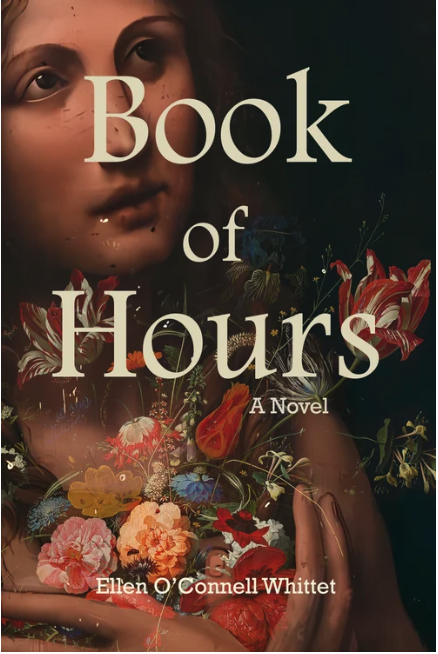
Book of Hours by Ellen O’Connell Whittet
Dzanc Books, 2026 240 pages $27.95 paper
ISBN 9781938603952
Lisa C. Taylor is the author of the novels, The Shape of What Remains and Like Gravity, Like Love, (forthcoming in May 2027), three poetry collections and two short story collections. She co-directs the Mesa Verde Writers Conference and Literary Festival in Mancos, Colorado. www.lisactaylor.com