
 Review by Rebecca Jane
Continental Drift maps humanity’s kinship with a teeming variety of psycho-social natural geology. A “Field Trip” lyric considers “what rays gild a heron’s thoughts?” (10) and “what green itches each new earth in winter’s wake” (11)? These poems reveal the wordless connection between human experience and land, sea, sky, geological time, tectonic touch and glide. Beyond that, these poems witness the human dramas of war, refuge, and rebuilding from the perspective of stone, grass, muddy water, and salty shore. We may know traumas that force people to scatter, drift, and wash up somehow still alive on new shores. What fresh understanding of that do we gain when we realize “every liter of water in the world is a nomad” (15)?
Doctor Mai-Linh Hong is a Vietnamese American refugee poet and literary scholar. In a recent interview with Trio House press, after Continental Drift won the 2025 Trio Award, Dr. Hong discussed her poetry writing process, “There’s an intuitive aspect to it. Sometimes one image wants to be next to another image. Sometimes certain lines want to be on the page in a particular physical or visual way; they want to use the space in a particular way.” (Trio House Press Substack May 18, 2026)
Honoring the desire of the image, heeded by such an eloquent intuition, reroutes emotional terrain that is as intimate as it is expansive. The “mewling plink plink of bullets hitting a muddy river” (12) precedes a forest of aunties planted in the kitchen, preparing to make soup. These images create a place to which we can retreat and resist; be silent and defiant; see ghosts and read to them at home. The poems show up to the page in every shape and size: italicized, dripping down, glowing, reflecting, drifting, and even hanging upside down, which provides a visceral experience that aligns with “Field Notes from Aliens Who Float.”
In the poem “I Enter a Room Where the Dead Still Sew,” images arrest: “Even thread, so light it is almost not there, will hurt if you pull hard” (51). The vivid depiction of generations sewing together creates a satisfying arc aglow with the beautiful metaphor of our kinship as “an inching archipelago / of restless, glimmering wishes” (63).
Then, we start to perceive the drifting continents as inextricably linked to our humanity, our human connection:
I am here & so are you
& we tent our fear
for now, even in our sudden
free-fall & we note
the warmth
our bodies generate
even when we are still
& so I no longer wonder
why we say fall
asleep, like we say fall
in love, for what do I guard
more closely of storybook love
than the feline comfort
of being together
behind doors, safe
& soundless for a moment
in a world that seemingly wants
only to roar. (71)
The takeaway here is some feeling that needs no name, something that is equal in its profound peace and profound power, “I have learned to live without another’s apology / I will learn to mother with the earth ablaze” (39). These poems remind us of the ways we are strong and care for each other, ways we can be buckets of water in a fire line.
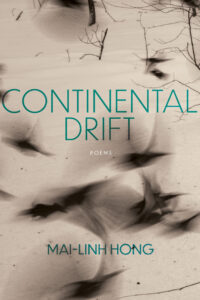
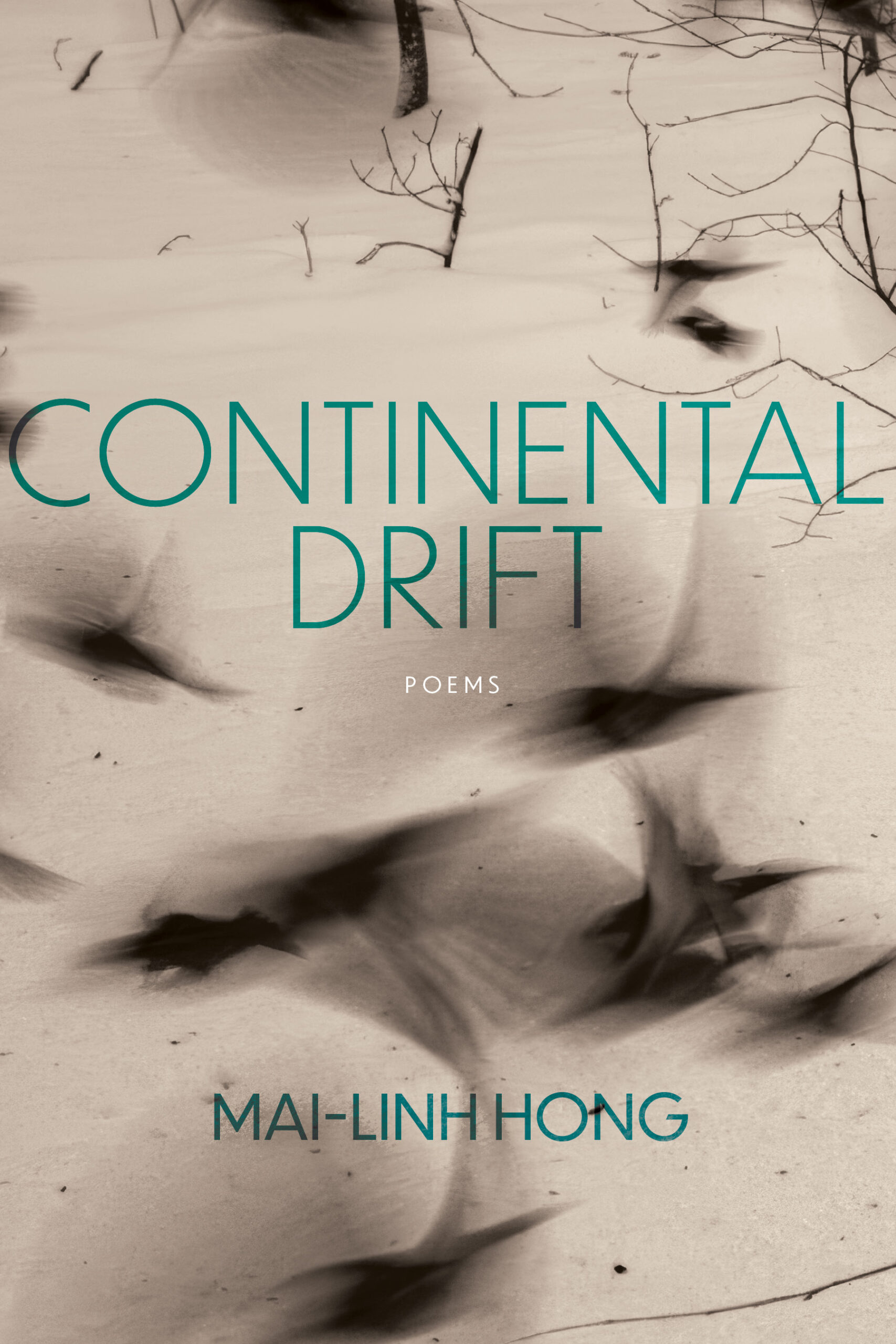
Continental Drift by Mai-Linhh Hong
Trio House Press, 93 pages, paper $18 USA
ISBN: 978-1-949487-64-0
Rebecca Jane is the author of She Bleeds Sestinas, which was a finalist for a Best Book Award in 2023. She is a freelance writer, ghostwriter, and poet who travels to Asia to study yoga, Sanskrit, and Mandarin. She works as a bookseller at The Feminist Bookstore and also serves as the Marketing and Production Manager, Copyeditor, and Book Designer for Jaded Ibis Press. She lives with her daughters on unceded Kumeyaay land. (San Diego, California).