
 Review by Allie Rigby
“I’m not being dramatic, but as women we are walking secrets,” said actor Kristin Stewart at the Cannes Film Festival in 2025. At the time, Stewart was referencing her film, “The Chronology of Water” based on the anti-memoir of the same title by Lydia Yuknavitch. Perhaps it takes anti-memoirs and hybrid memoirs to crack open the walnut secrets of the body: to lay open the flesh of one’s storied organs and blood.
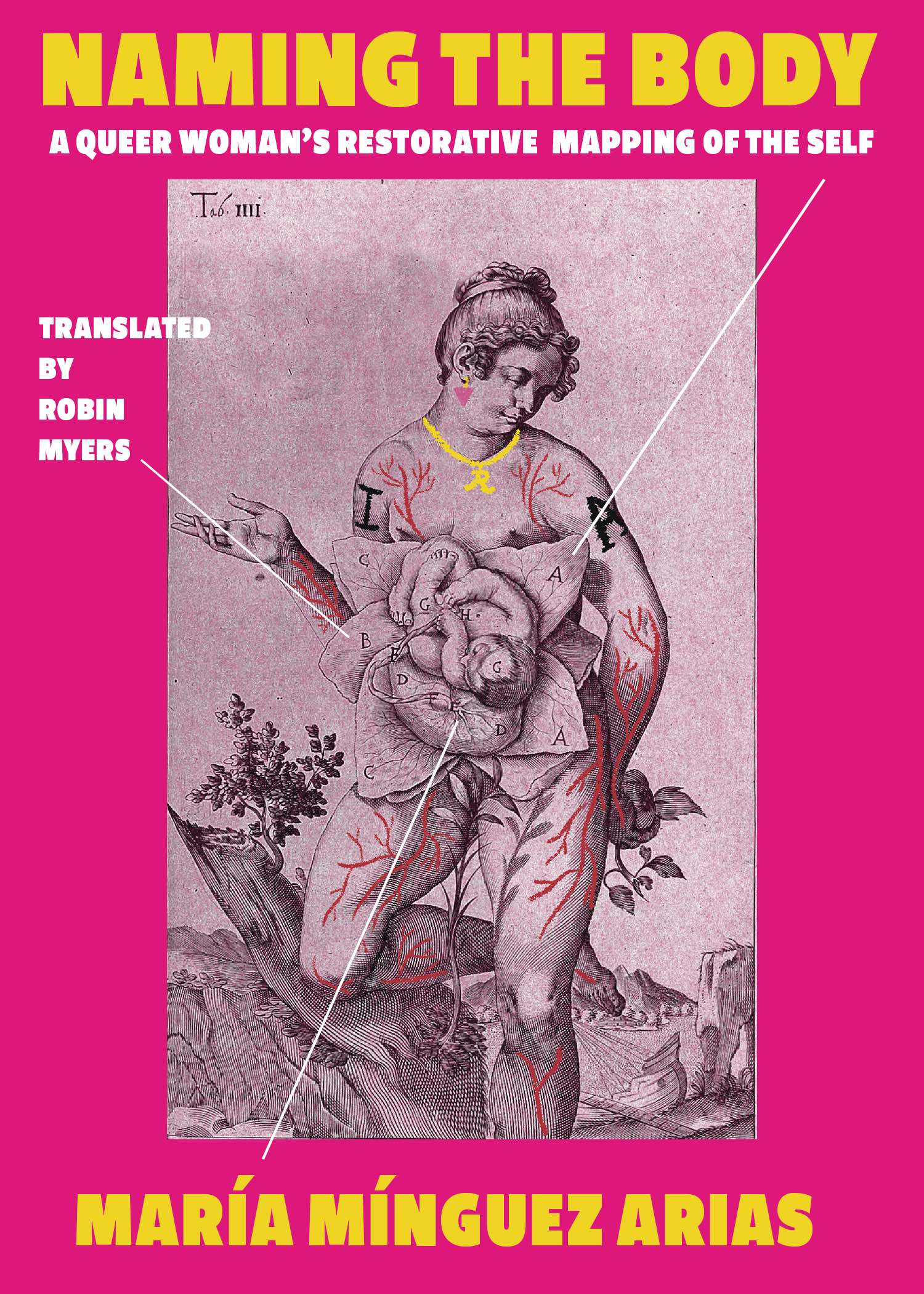
In María Mínguez Arias’s Naming the Body: A Queer Woman’s Restorative Mapping of the Self, translated from Spanish by Robin Myers, the walnut bits of this hybrid memoir pulse with anger, vibrancy, humor, and love.
Amidst the patriarchal violence that her body navigates, the author finds ways to log each “chemical memory forced from the metal of waiting” as a testimony of survival (125). The memoir is just that: a collection of testimonies based on Mínguez Arias’s lived experience as an immigrant, queer woman, mother, athlete, and Spanish-language writer in the United States. Each essay circles back to the body and the stories it carries, which are sometimes whispered and other times shouted.
This is no “typical” memoir with a beginning, middle, and end. In “Fatherly Trinity” Arias comes to terms with the long list of nonconsensual acts her body has witnessed–or been thrown into, especially in adolescence. By the end, she offers hope in her new realization of how powerful rage can be: “My anger has changed: I still don’t hide it, not even from my children, but now it also affirms me as a mother, because it’s compatible with love and care and joy: they nourish and define each other. My rage is regenerative” (33). The last line reads as an affirmation and a prayer, as that regeneration becomes necessary to survive, yes, but also to experience joy this life. “A Map of the Body Under Siege: Pandemic 1” explores personal body-territories during the changing hellscape of Covid-19, whereas “Three Matchmakers: Pandemic 2” chronicles a connection to the earth amid catastrophic wildfires. By the end of the memoir, Arias has offered readers a mix of essays, poems, footnotes, hashtags, letters, and a log “of watersheds.”
If you are alive, then you can relate to the personal, social, and psychosocial traumas that line these texts, even if the details of your stories differ. While the tone of the collection is serious, there are moments of humor too, such as when Arias pokes fun at her fainting spells or speaks to the healing power of a good belly laugh. Anyone who has experience trauma–from a sports injury to a deeper, uglier form of systemic violence, will find themselves nodding along to the promises sprinkled throughout Mínguez Arias’s memoir. Promises like you will survive, your body will remember, and your communities will carry you forward.
María Mínguez Arias is a fiction and nonfiction bilingual writer, translator, and journalist. She is the author of Nombrar el cuerpo (named among the Best Queer Lit of 2022 in Spain by Revista Qué Leer and Vanity Fair Spain’s Pride Reading list for 2025) and the International Latino Book Award-winning novel Patricia sigue aquí. She is co-editor of #NiLocasNiSolas: narrativa escrita por mujeres en Estados Unidos (2023). https://mariaminguezarias.com/
Naming the Body: A Queer Woman’s Restorative Mapping of the Self, by María Mínguez Arias, Translated by Robin Myers
Mouthfeel Press, 2026
ISBN 978-1-957840-50-5
Allie Rigby is a poet and reviewer with roots in the chaparral of California. Moonscape for a Child is her debut poetry collection (Bored Wolves, 2024). Writing honors include a Fulbright Fellowship, a William Dickey Fellowship, and contribution to the annual Bread Loaf Writing Conference. She’s on Instagram @allie.j.rigby.