
 Review by Mary Fontana
Tina Kelley won a 2003 Washington State Book Award for her first book of poems, The Gospel of Galore. Her recently published fifth collection, the witty and observant Field Guide to North American Words, does for language what a good guidebook does for flora and fauna, presenting living specimens to seek out and marvel at, and drawing the reader toward greater intimacy with the world. Language and guidebooks are at their most useful, and exacting, when they tease out nuances between closely related things. Here Kelley explores the fine shades of meaning between this word and that one—windsnap, windthrow—as well as the shadows and slippages where language fails us.
The collection opens with the poem “Take, Eat, This Word,” which elevates the reception of language to a religious rite and proclaims its ability to feed us. The book’s overall structure maps loosely onto the alphabet, and nearly every poem features an emphasized word that justifies its placement; in the section titled “Lotta A’s”, for example, we’re treated to acyanopsia, aeolist, aphonia, and avimancy. The title poem curates a diverse menagerie of words, each in their proper habitat: “Marvel at anhedonia, the absence of happiness,/ found on the roots of dying trees, smelling of rotten/ filbert nuts” (12). An avid worder could flip through this book simply for the sightings of exotic terms and come away exhilarated. Don’t consider yourself a neophiliac (lover of novelty)? Fear not: Kelley also builds memorable lines from perfectly everyday words, as in the lovely, elegiac poem “The Nearest Exit May Be Behind You,” written for an aging parent: “When I’d said, ‘I don’t want anything to happen to you,’/ was that a curse?” (21).
Kelley writes with intelligence and imagination, leaping from Arctic snowscapes (sastrugi: “wind-carved snow ridges” [31]) to secret messages hidden in wax (steganography: “a form of writing that obscures the fact that a message exists” [62]) to the common sea animal coloration pattern called countershading (“in which pigmentation is darker on the upper side and lighter on the underside” [30]). But little in these poems remains obscure in itself; this poet revels in language’s ability to illuminate and precisely define, not to camouflage. Thus the poem about countershading moves with a clear logic from the “obliterative coloring” of leatherback turtles to the sacrificial erasure of motherhood: “Most of us have felt the pain/ of being hard to see in our own homes” (30).
Poets who speak plainly risk sentimentality. I’m not one of those readers who consider sentiment a fatal flaw—quite the opposite— but Kelley’s clever takes do occasionally verge on the corny: one poem, instructing the reader “How to Believe in God,” lands on heart-tugging rescue dogs as the final proof. In “The Marriage of the Hobbies,” the speaker’s knitting habit entangles, literally and figuratively, with her spouse’s love of fishing: “our hobbies// embrace in disarray in the back seat, loose line, balls/ scattering” (40). There is something, dare I say, uncool about this poem, in its frank affection and straightforward linkage of images: this one from fishing, that one from knitting, repeat. It strikes me: this is the voice of a mom. She is going to lick her thumb, embarrassingly, and rub that smudge off your cheek; she is going to remind you, at school drop-off in front of all your friends, that she loves you. Thus Kelley has the chutzpah to end a skillful, bittersweet poem about motherhood and loss and aging and gratitude with a homonymic metaphor straight off an inspirational poster: “the gift of, yes: as-yet-unnumbered months, the greatest imaginable present” (26).
The collection’s later poems begin to break out ahead of language, yearning toward complexities for which no precise word yet exists. They explore the limits of what words can do, and what we wish they could do. The poem “Breastwork,” about a loved one’s cancer diagnosis, repurposes modern tech lingo to stunning effect: “As I close the file I’ve named for you,// the computer tells me ‘Word is saving Anna.’ Please, God” (83). The poet knows there are knots that speech can’t dissolve, situations too profound for language. In the book’s final poem, the words that might heal humanity’s rifts “float on a white horsetail, twenty thousand feet up” (90). Yet in the final line Kelley insists on a clear-eyed hope: “Each new word could bless and keep us, if we listen, if we say it” (90).
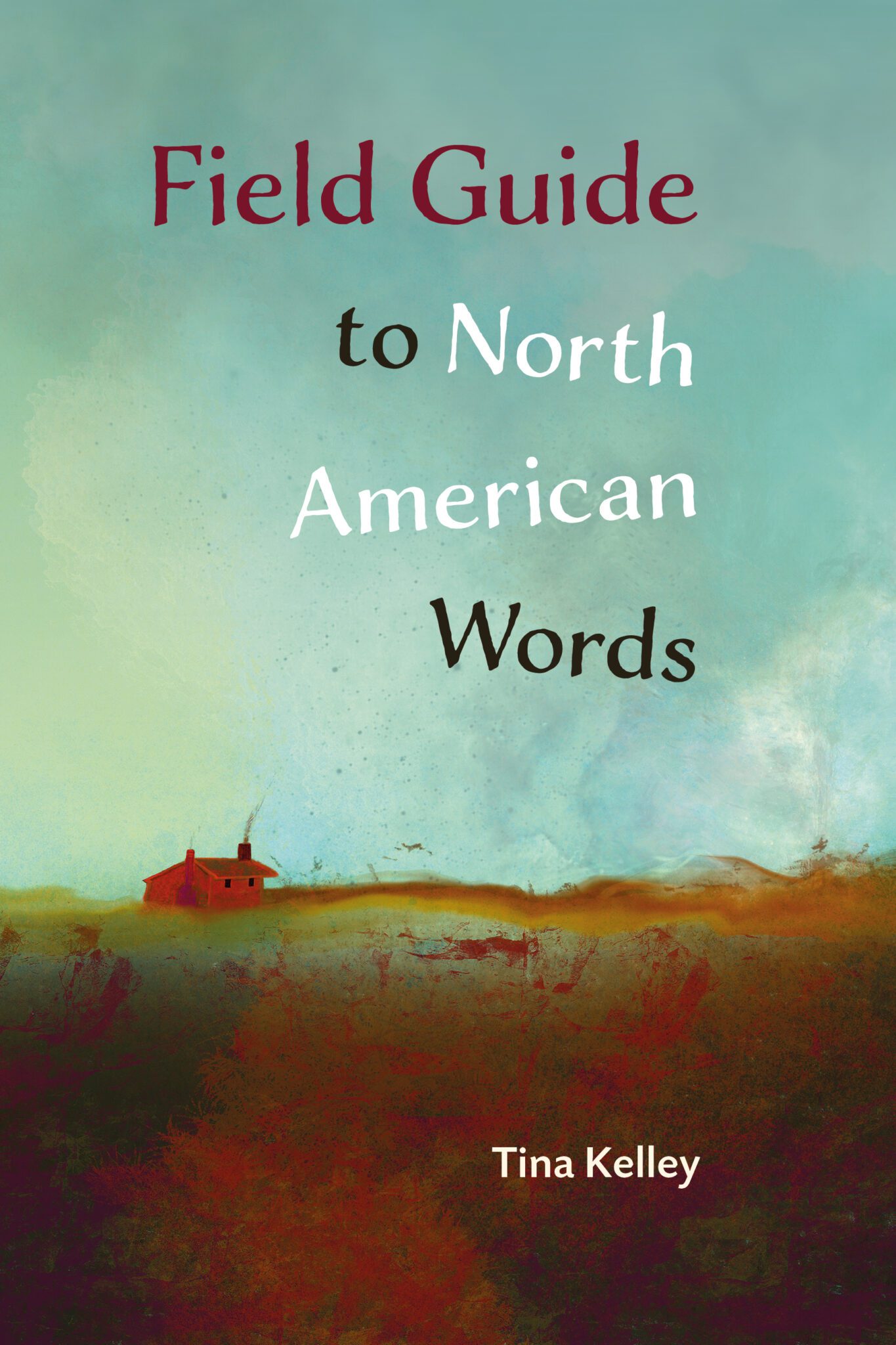
Field Guide to North American Words by Tina Kelley
Jacar Press, 2026, 93 pages, $17
9780936481654
Reviewer bio: Mary Fontana is the author of Strangers in the Province of Joy, a narrative history of migration across the US-Mexico border. Her work has appeared in The Sun, Kenyon Review, Rattle, Prairie Schooner, Sojourners, and elsewhere. Her poetry manuscript Bright Extinction was a finalist for the 2026 Catamaran Poetry Prize, and her poems took second place for the 2026 Frederick Morgan Prize. She lives in Seattle.