
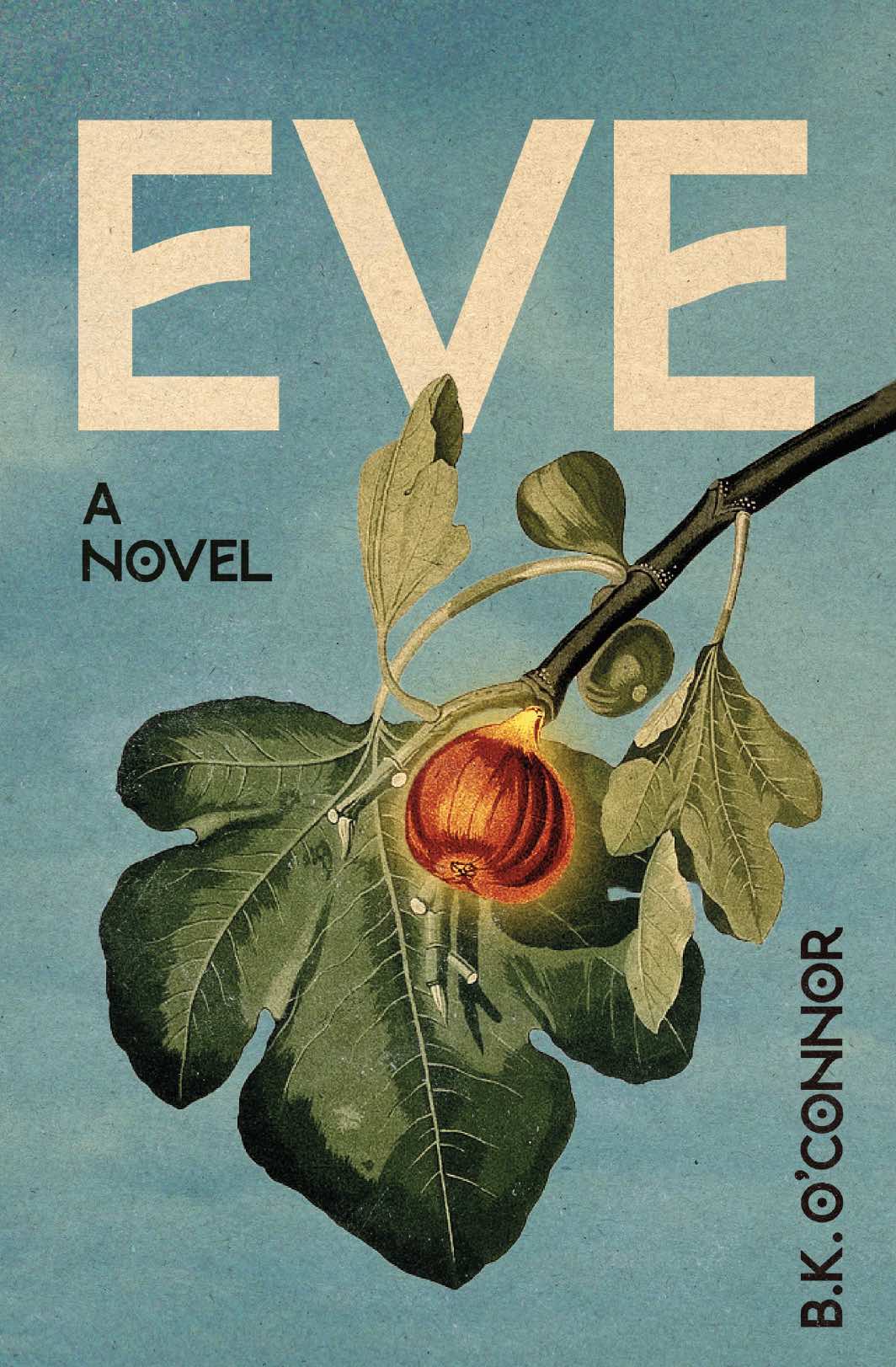
Review by Emily Webber
Growing up with the Genesis story, Eve was always framed as either a cautionary example or the root of all human suffering, but B.K. O’Connor’s novel, Eve, takes a different path. From the start, the book steers away from moral condemnation and replaces it with something everyone should find compelling: curiosity about the world and what it means to be alive. O’Connor presents a woman on a journey to find answers and create a life on her own terms. She doesn’t want to be told what to do, and she doesn’t want to simply fill a role she’s been assigned. Meanwhile, Adam is content with obedience, completely incurious about what lies beyond their walled garden. When Eve arrives, their different outlooks become apparent. Adam feels complete now that Eve is there, and Eve feels trapped.
She imagines Adam’s first days, alone in Eden, not a soul around to admire the blossoming buds and infinite rising and setting of the sun in vibrant skies like the neon dawn unfurling above her now. How exhilarating it would have been for her. How lonely it must have been for him.
Eve, frustrated with Adam’s automatic acceptance and lack of desire for something else, goes out on her own. She eats the forbidden fruit at the urging of Lucifer, and Adam reluctantly follows, causing her and Adam to be banished. From this point on, while Adam still loves Eve, he cannot keep his bitterness and resentment away.
Once Eve and Adam leave the garden and navigate early human society, the story gets even more compelling. Watching them adapt highlights just how narrow traditional roles can be. Adam slips easily into the rhythm of village domesticity, but for Eve, settling down starts to look like another cage. The story takes some bold turns. Especially when Eve chooses to leave behind her children and Adam’s protection to wander the ancient world in search of life’s meaning. Eve’s choices aren’t always easy to cheer for, but they feel fiercely, authentically human. It is fascinating to see how Eve and Adam move through the wider world differently and to learn what lies beyond Eden. O’Connor richly details new people and places.
Along with the new worlds they discover come additional gods and goddesses who created those people and worlds. Where the book lost me a bit was in how it handled the divine. God came across as flat and stereotypical. Too much like an old man floating in the clouds, totally disconnected from his creation. He watches Adam and Eve like a disinterested spectator watching animals through the glass of a zoo exhibit. The recurring cutaways to other gods and goddesses posed a similar problem for me. While Eve’s journey is messy, painful, and grounded in raw human experience, these divine interludes felt a little bland compared to the real emotional consequences down on Earth. What did work was Eve’s connection with Lucifer, because it seemed grounded in real conversation. They represented two restless minds questioning the boundaries drawn around them.
Ultimately, what stuck with me wasn’t the divine, but Eve’s struggle. It asks hard questions about what we give up for comfort and security, and whether peace is worth having if it costs you your curiosity. At its heart, this is a beautiful story of motherhood’s sacrifices, joys, and hard decisions.
She has been consumed by the children. Each birth set her back into healing, into nursing. With a small child in her arms and a growing boy to chase, her mind is foggy, thick like sinking mud. Adam has been away more than he has been home, yet she finds herself unable to complain when he arrives with such provisions. The children are fed. But she resents the tethers of motherhood against the freedom of fatherhood. The burden of creation lies heavy on her shoulders and light on Adam’s. It is she who was meant to go. It was Adam, prone to stay. Yet she remains feeding, culling, and cooking. He is off, seeing the world. His feet trace far, new sands while her prints trace circles around the fire.
B.K. O’Connor’s Eve presents a refreshing, genuinely human reimagining of an old story that will cause readers to wrestle with our origins and what it means to live.
Eve by B.K. O’Connor
Histria Fiction
March 03, 2026
9781592116690
Emily Webber is a writer of criticism, fiction, and creative nonfiction. Her work has appeared in Rain Taxi, the Ploughshares Blog, The Rumpus, Writer magazine, America Magazine, and elsewhere. She’s the author of a chapbook of flash fiction, Macerated.