
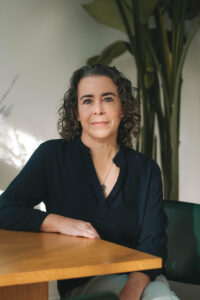
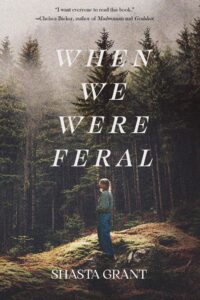
 Shasta Grant on When We Were Feral
Interviewed by Tyler Wetherall
Shasta Grant’s haunting debut novel is a coming-of-age story that doesn’t shy away from the brutalities of girlhood. Set in 1990s rural New Hampshire, it follows 13-year-old Maggie over two summers following her mother’s abandonment. She initially finds refuge in her best friend Sarah’s church-going family, until another classmate’s mother goes missing, and the girls are drawn together in a complex bond. A chance encounter with a group of older boys in the woods sets the three girls on a dangerous new path, as they discover the power and peril of their newfound desires. Beautifully observed and suspenseful, the novel challenges the “admission price” girls must pay to enter adulthood and conjures just a glimpse of an alternative that is strong and unafraid.
TW – What inspired you to take on the coming-of-age genre?
SG – I’ve always loved coming-of-age stories – that’s my sweet spot. I wanted to write one that felt a bit grittier than most of what I’d read. I wanted to set something in the 90s that wasn’t all hair scrunchies and Saturday morning cartoons but was pulling the curtain back to show what the reality for a lot of girls was at that time: those first stirrings of sexuality; of your body changing; of both wanting and not wanting the attention of boys, and not really knowing what to do with that attention.
TW – What were some of your influences?
SG – While I was writing the first draft I was reading Marlena by Julie Buntin, The History of Wolves by Emily Fridlund, Girls on Fire by Robin Wasserman, Mothers by Britt Bennet. I also reread Homecoming by Cynthia Voigt, which was a book I had read in childhood.
TW – Did you have any rituals before sitting down to write?
SG – I had these Paddywax Library Candles, each named for a different writer. While writing this novel, I burned the John Steinbeck candle, which has this smoky, woodsy scent. If I smell that I’m right back in the book. It’s so helpful to ritualize the time and space for working on a project – anything you can do to re-enter the space quickly as well as to leave it behind, especially if you’re working on difficult material.
TW – What was it about the experience of motherlessness you wanted to explore?
SG – I was raised by my grandparents and grew up with a mother who came in and out of my life. There are parts of my story I’ll never know, because everyone is dead, and nobody wanted to talk about any of these things when they were alive. I wanted to take that feeling of not having a mother, the emotional truth of it, but give it a different story. I gave that wound to Maggie. In the novel, her absent mother provides some tension, it’s what’s pushing Maggie because she wants to find answers.
TW – For me, the book resisted blaming the mothers. Rather it shows how societal expectations placed on women at every stage is untenable. Like the witches the girls imagine in the woods, the alternative to a life of cloistered conformity is exile. Was it important to you that the absent mothers weren’t portrayed as villainous?
SG – That was important to me. They have their own reasons for taking off, but they aren’t monsters, and I didn’t want to make them into monsters. I don’t know that the girls, Maggie and Erin, really understand why their mothers make certain decisions, but I wanted to provide enough hints so that readers could understand. We place so many expectations on mothers and we expect motherhood to fill women up as their primary role, but that’s not true for everyone. I wanted the reader to have some compassion for the mothers; I think that is a more nuanced and interesting story.
TW – Maggie says near the end of the book: “What I wanted was for mothers to warn their daughters.” How is the book asking its mothers and by extension society to do a better job of shepherding girls into adulthood
SG – I don’t want it to read like an after-school special with this takeaway message, but I think it’s asking us to teach our girls about claiming their power. In the same way we encourage boys to be strong, to be leaders and athletes, to take charge, I think we need to talk to girls in that way, encouraging them, or expecting them to claim their power. I look at this as a feminist book.
TW – You establish a wonderful tension between the beach, a space of normative girlhood, with sunbathing and teen magazines, but also a place in which they’re “on display, our bodies revealed to boys”; and the woods, which is feral and witchy, “a place just for us… no lifeguard here to save us.” What does feral mean to you and what do the woods symbolize in the context of the novel?
SG – My answer to this keeps evolving. What they’re doing is trying to survive when they don’t have a lot of power in their lives. Boys are taking things from them. Their mothers have left. Their fathers are not really paying attention. The only adult who’s paying attention is Sarah’s mother and she has pretty conservative expectations of what it means to be a girl. The woods is where their perception of themselves changes. They’re digging in the earth, trying to assemble a mother; they’re become animal-like. Ultimately, they’re just trying to survive this period of their girlhood. To me that felt like feral energy.
TW – Not to give too much away, but two of the girls commit an unforgivable act of cruelty at the end of the novel, which will haunt me forever. Was creating this moral ambivalence important to you and why did you want the protagonist to bear some culpability?
SG – Hurt people hurt people is the simplistic answer. Maggie and Erin have been pushed to the absolute brink. They make a terrible decision, but at that point they truly don’t care about anyone or anything, including themselves. It was important that Maggie have some complicity or culpability in what happens. I wanted the stakes to be really high and for her own actions to be something she has to carry forever. This isn’t just a book about what happens to Maggie but what she does as a result.
TW – What were some of the biggest challenges you encountered while writing, especially some of the more difficult scenes?
SG – Deciding how explicit to be in the more difficult scenes. I played with that in revision, and ultimately, I pulled back on the details and let readers use their imagination. Some of the things I cut felt like they were just too much. I want the reader to be uncomfortable but not too uncomfortable.
TW – WWWF came out just last week, but are you working on anything new?
SG – I have the first draft of another novel but I can’t decide if anything there is worth pursuing. I swore I would not write another coming-of-age story but I don’t know if I’m interested in any other kinds of stories!
Extract:
“This is what the mothers should have said to their daughters: learn to cut through the water with your own strong arms, kick with your fierce feet. Master the backstroke, butterfly, freestyle. These strokes will transport you from here to there. You don’t need a boy-sized tugboat to move your body through water. Pull yourself up onto the raft with your sinewy arms, honed from hard work, from play. You have no need for stairs. Your body will carry itself into the woods, legs sturdy with muscle. You can walk miles and miles unassisted. March right into those woods, with its legends, its frights, make it your home. You have a body.
Lead the way. Let them follow.”
From When We Were Feral
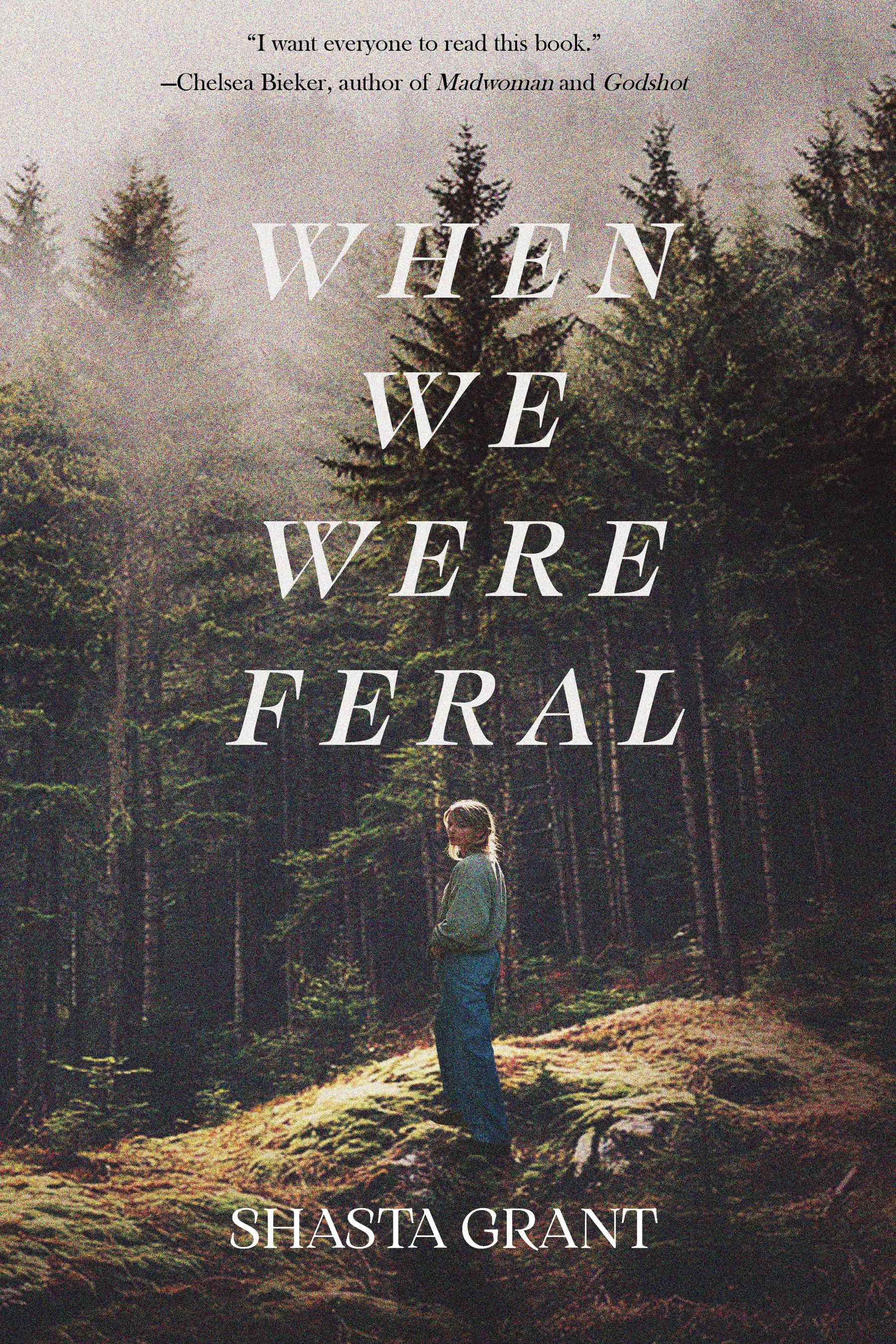
When We Were Feral by Shasta Grant
Regal House Press, July 9, 2026
ISBN 1646037391
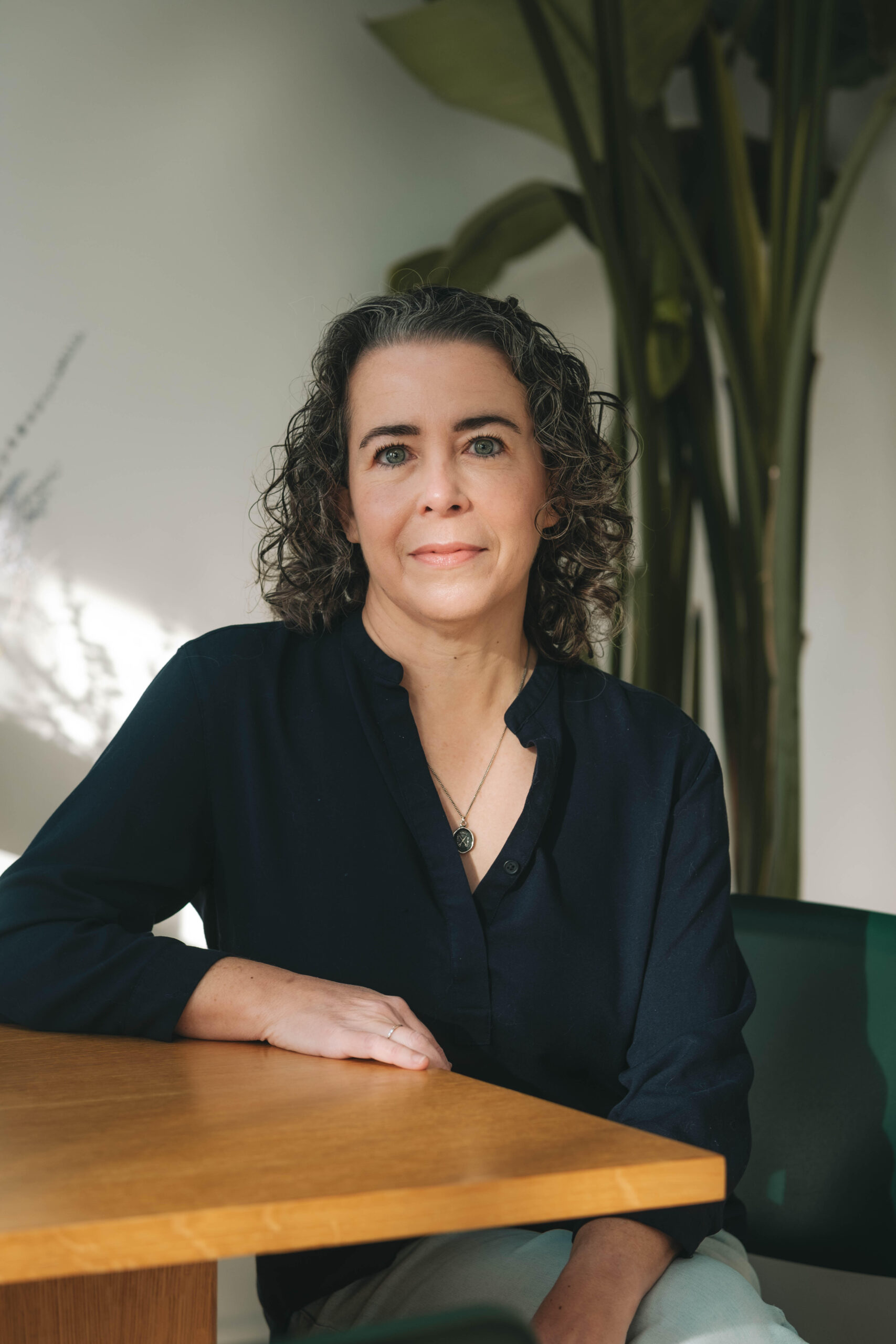
Shasta Grant grew up in New Hampshire and now lives in Indianapolis. An Aspen Words Emerging Writer Fellow, Kenyon Review Short Fiction Contest winner, and recipient of writing residencies from Hedgebrook and The Kerouac Project, she holds an MFA from Sarah Lawrence College. She is the author of the chapbook Gather Us Up and Bring Us Home and her stories and essays have appeared in cream city review, Epiphany, wigleaf, and elsewhere. When We Were Feral, her debut novel, was published by Regal House Publishing in June 2026.
Tyler Wetherall is a journalist, author, screenwriter, and teacher. Her debut novel, Amphibian, was released in 2024. Her first book, No Way Home: A Memoir of Life on the Run, came out in 2018 from St. Martin’s Press. Her writing has appeared in The New York Times, British Vogue, The Guardian, National Geographic, LitHub, and others. She is also the creator of Reading the City, a weekly newsletter of bookish events taking place around New York City. Her writing is represented by Emma Parry at Janklow & Nesbit Associates.