
Therese Gleason
Some Defining Moments in Several Instances of Conception, Gestation and Birth: A (Personal) History
To conceive (verb)
1. become pregnant with (a child)
The first time I got pregnant on the first try. It was almost mystical; I peed on the stick at dawn on the fifth anniversary of my father’s death, crying when the second line materialized, bright pink. The second time took months. Diagnosis: luteal phase defect, my menstrual cycle too short, womb shedding its nest too soon for a fertilized egg to implant. I took Clomid, which caused chemically induced mood swings but didn’t dull my intuition. A twin myself, I knew I was carrying two babies before the test confirmed it: I dreamed I sat down to eat at a large table and violently sneezed two beans into a napkin, my dinner companion assuring me everything was okay. But my chart was accusatory, stamped high-risk due to multiple pregnancy and Advanced Maternal Age (35).
To conceive (verb)
2. form or devise (a plan or idea) in the mind
The first time I gave birth I had a plan: no Pitocin, no epidural, no c-section, a doula. A week after my due date, the doctor ordered an ultrasound. My baby measured ten pounds. She sat at my bedside in the exam room patting my knee as I cried—c-section, induction, trial of labor—saying in a few days we could be laughing that I’d pushed out a ten-pound baby on my first try, or I could have bladder and bowel dysfunction for the rest of my life. We scheduled a surgical birth in two days. Still hoping to go into labor, still barely dilated a fingertip, I didn’t have a single contraction. Diagnosis: failure to descend. In the OR, lifting my firstborn out of me, the doctor affirmed the decision: her head hasn’t even molded yet. I wondered if a hundred years ago one of us would have died.
To miscarry (verb)
1. (of something planned) fail to attain an intended or expected outcome.
My mother’s mother bore seven living children and one stillborn girl after her own mother died suddenly. My great-grandmother had four miscarriages and three surviving children. She hemorrhaged after each birth, nearly bled to death when one baby entered this world having already left it. My great-aunt remembers her father carrying her mother down the stairs wrapped in a blanket, her face gray, clutching a tiny blue bundle to her chest, on the way to the hospital. My father’s great-grandmother died at 48, a year younger than I am now, of puerperal convulsions after delivering her tenth child. I found the headline from 1910: Mrs. Edward Sweeney expires suddenly at her home following the birth of a babe.
To deliver (verb)
1. give birth to
2. provide (something promised or expected)
3. assist in the birth of
My mother’s great grandmother delivered eleven children who lived and two infants who died. She attended births with the country doctor, who came for her at all hours in his horse and buggy, his black bag packed with forceps, scalpel, and sutures. It was her job to hold the woman’s hand, wipe her brow, boil water in the kitchen to wash white sheets soaked red beneath the hips of her neighbors. And to bathe the newborns, including the ones who never drew breath, before tucking them in to their mothers’ arms. My mother delivered all five of us with no pain medicine, including my sister and me, footling breech twins.
To deliver (verb)
4. (of a judge or court) give (a judgment or verdict)
5. save, rescue, or set someone or something free from
When I brought my first baby home from the hospital, my mother told me not to read anything that didn’t say what I was already doing was the right thing: there’s enough in this world to make mothers feel bad. I knew. During my first pregnancy, I eschewed caffeine, allergy medicine, and Advil. I ended up anxious and depressed. The second time, I stayed on Zoloft and Zyrtec and drank a cup of coffee a day to keep my migraine at bay. I supplemented with formula and asked my mother and sisters to come help during the fourth trimester. Months later, on the street with my twins in a double stroller, their sister skipping by my side, people couldn’t resist, asking are they identical; prying are they natural? Meaning, Did you have infertility? Were you artificially inseminated? Did you do IVF?—the post-partum equivalent of belly touching. I’d just smile and keep walking. Let them guess.
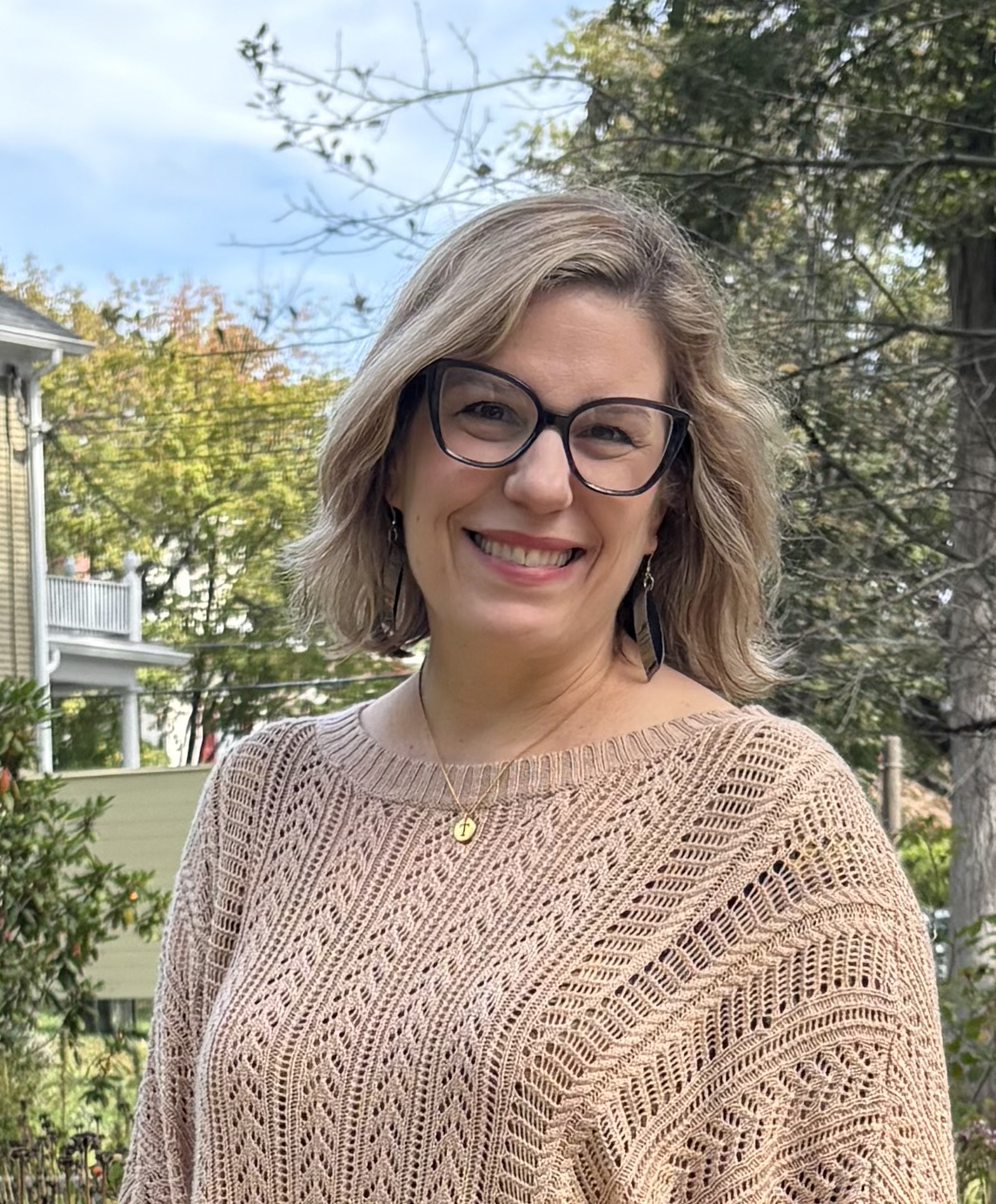 Therese Gleason is author of three chapbooks: Hemicrania (Chestnut Review, 2024), winner of the Jean Pedrick Chapbook Prize; Matrilineal (Finishing Line, 2021); and Libation (2006), co-winner, South Carolina Poetry Initiative Chapbook Competition. Her work appears in 32 Poems, Cincinnati Review, Indiana Review, New Ohio Review, Pithead Chapel, and elsewhere. (Online: theresegleason.com).