
Lisa Moak
Bonding With Stone
My mother was a go-go dancer, or so I was told. I never met my mother. I doubt she was allowed to hold me before I was whisked away to foster care, then adopted. I know she died of an overdose in Dallas in 1979. I’ve also seen her senior yearbook photo, which showed a beautiful, platinum blonde girl with a button nose. The text underneath included her hobbies, like pep and choir, but it didn’t reveal the reason for the pain in her eyes.
For only $69 to a DNA testing site, the puzzle pieces of my ancestry fell into place. I quickly found relatives on my birth father’s side, and my father himself, a tough man living in the mountains of Colorado. On my mother’s side, I found a half-aunt who was four years old when I was born. She provided a few photos of my mother and a short description of a rebellious girl who smoked pot in front of her mother, unheard of in rural Oklahoma at the time.
My mother spent her high school years in the town of Temple. I was a product of a blind date with a handsome Marine home on leave. She was quietly packed off to a home for wayward girls in Oklahoma City over the summer of 1965, after her senior year. I was born in June and adopted in August.
The only tangible proof of my mother is her gravesite. Her body was returned to a cemetery in Temple. I now reside in Dallas and felt an internal pull to view her headstone in person. One stormy Saturday, I made a three-hour journey alone with fake lilies and a Mother’s Day card in the passenger seat. Mother’s Day was a week away, and as her only child, I figured she never celebrated.
I knew I was adopted from a young age. I didn’t look like any of my adoptive family, or share the same temperament. I was blonde, they were dark. I was sensitive. They were a tough German stock who survived the depression, living in a hole in the ground in the tough dirt of Oklahoma. My brother, who was also adopted, and I would stand in a corner at family gatherings and observe much like aliens visiting another planet. We belonged but didn’t.
Even though my adoptive family was stable, I was not. I was a tree with no roots being swept away by each gust of wind. Life was messy as I left home and went to college and beyond. I needed grounding, but instead I bumped into walls and got lost with the wrong men. It was hard to know who I was with no roots, backstory, or identity.
I wondered about my mother as a child, but held no fantasies that she was a princess or would one day find me. Instead, I saw her as a lost soul who gave birth while still a child herself. I wondered what I inherited from my mother. My bouts of melancholy? Was my love of writing from my mom or music? Or did I inherit the secret sin, the rebellious side that would doom my life to follow hers? She was petite and beautiful, but I didn’t inherit her feminine beauty or the button nose. I have the height and nose from my birth father’s side. After meeting him, I realized I not only look like him, but we have the same sense of humor and humble personality as people who have lived messy lives.
The Temple Cemetery was at the top of a hill outside of town. My mother’s headstone was nestled between her father’s and grandmother’s. The stone was reddish granite, like the red clay found in Oklahoma. A horse was engraved above the name and date. I placed the fake flowers and the card labeled “MOM” up against the stone, then took pictures. I laid my hand on the gravestone, trying to feel my mother’s spirit, but nothing stirred. There was no conjuring the dead and no bonding with stone.
“I have so many questions that will go unanswered. I have children and grandchildren. I wish you were here to see the legacy you began,” I said to no one.
As I stood alone on the hill, I hoped a family member would visit the site, see the card, and know the secret. I wanted the card to seep into the ground, spilling words onto the buried souls. I felt an urge to yell into the wind and across the town, “My beautiful mother is dead on this hilltop.” But I was hungry and wanted to stay ahead of the rain on my journey home.
Since that day, I have found my mother’s death certificate. With the few facts listed, one stood out under the label employment: Dancer. Maybe I have followed her journey in some ways, having also ended up in Dallas, been a single mom, and loved the wrong men. Somehow, I survived. Was it from the grit of my adoptive family? Maybe DNA from my ex-Marine father? Or the DNA from my mother’s side, which included a U.S. Marshal killed in the line of duty on the streets of Temple and buried long ago in that same cemetery. I’ll never know.
When my adoptive dad died, I didn’t cry. I’ve wondered why I don’t mourn him. I asked my brother if he grieved our dad. He said no. What he said next gave me the answer I sought.
“We’re adopted, we’re not bonded with anyone.”
As adoptees, we’re untethered, our umbilical cords severed with no connection to the world.
The night I returned from Temple, a storm blew through the area. I woke in a fright, wondering if the flowers and card had washed away. I calmed myself by remembering the gesture was only temporary. Then I drifted back to sleep to dreams of a beautiful girl dancing on a hilltop. Dancing away. Forever dancing.
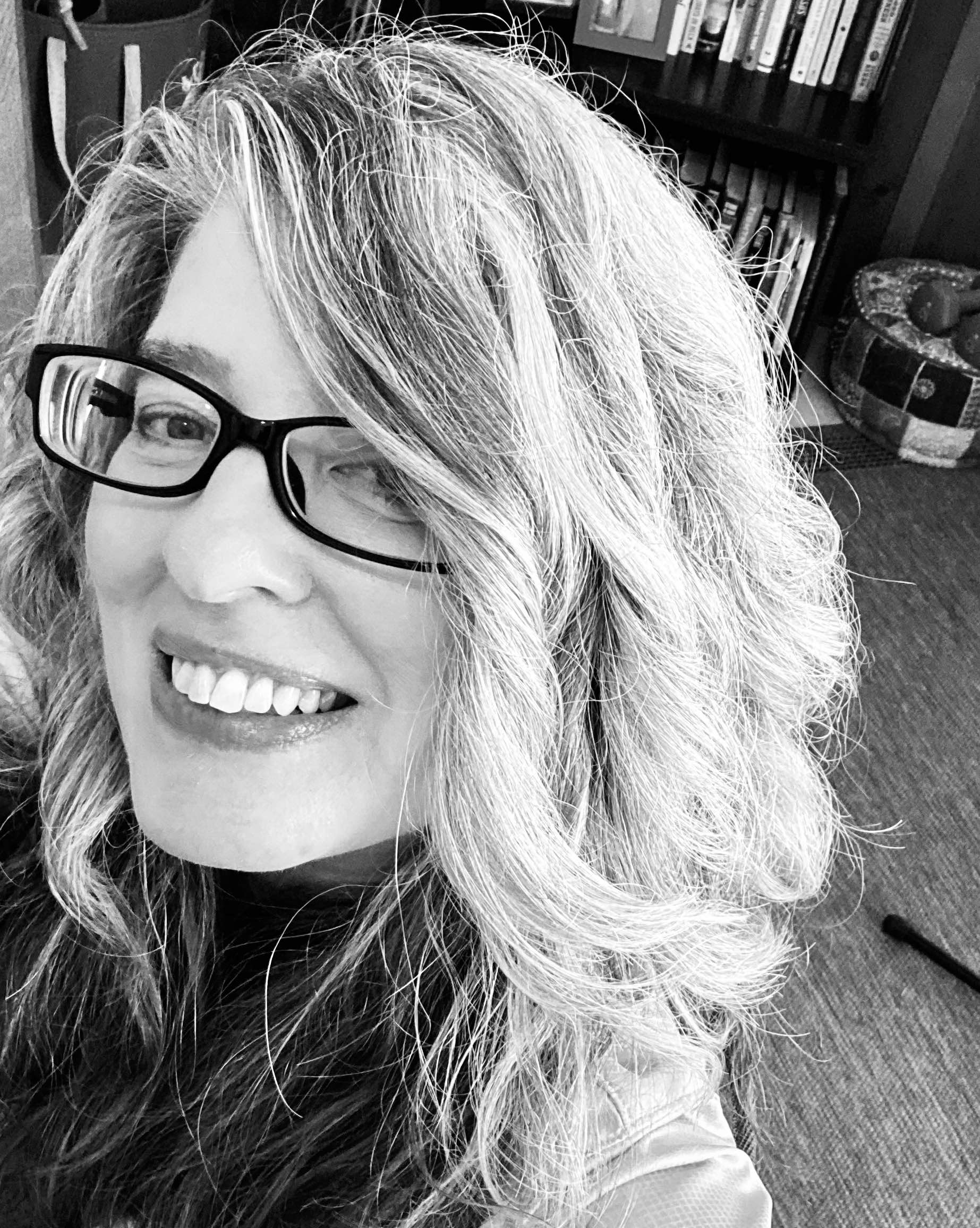 Lisa Moak is a writer and musician who lives in Dallas, Texas. Though marketing and corporate communications were her previous professions, she now spends her time writing and playing her trombone. Lisa has poetry and flash fiction featured in Mad Swirl, essays in Elephant Journal, and a short story published in Texas Shorts. She earned an MLA from Texas Christian University. Lisa also plays in various bands in the DFW area.