
Alisha Goldblatt
Tracing the Faultlines
We can’t choose our family, of course, nor is the warmth and reliability of our neighbors ever a guarantee. But somehow on this street of mostly transplanted now-Mainers, we won the lottery. Never mind that behind our home is a hideous chain-link barrier (no good fences here), and the residents in that house obsess over boundaries and water drainage; the homes we face are full of the best people. After my Zoom conference with the geneticist, it was a welcome relief to head out to one of their lake houses about an hour north of Portland. It’s an A-frame, gutted and redesigned, and their white dog chases her tennis ball right into the water, an adorable matted rug of a thing when she’s wet. Zev and the two boys swam out to the floating dock.
They counted and jumped together, hamming for the camera. The rain held off, rare this summer, and I lounged in the water on an inner tube, thrilled that I no longer need to be within arms reach to make sure my son doesn’t drown. Years and years of vigilance is hard to unlearn.
When they were little I used to catalog my children’s features. I’ve overheard dozens of other parents: He has his father’s eyes, temper, tiny ass, love of puzzles. I couldn’t stop finding ourselves in them. The curve of my cheek had been passed down to both kids, and they both got their dad’s full lips. Blithely, we say our children inherited these characteristics from us, as if we gave away the blueprint on purpose. I noticed at every bathtime that my son’s arms were growing steadily misshapen, along with his knees and ankles. Now I just keep his silky hair layered and long to mask a tiny head. His one elf ear, folded over and so much smaller than the other, has become a badge of honor: I’m part elf, he says, like Dobby.
In 2011, when we got the diagnosis of Zev’s 10q26 deletion, a rare chromosomal abnormality, I knew it was my fault. It confirmed everything I’d always thought: I’m a little bit broken. With shame, I see now that this attitude dismissed my son’s worth, that I didn’t value him for who he was, that I thought I was somehow owed a whole child who could be just as clever as I am. Now I credit him with bringing us a whole host of experiences, friends, challenges, and even opportunities for growth. It’s still about me. What does it say that we are testing now, 13 years in, to find out the source of the abnormality? He is here now, immeasurably precious and loved. He also has complex, unique and often insurmountable disabilities that affect the quality of his life.
Before Zev, before his sister, Anya, there were years of infertility, multiple miscarriages, and another almost-girl who was born too early. One of her abnormalities, along with missing chambers of the heart, was cerebellar hypoplasia. She made a space for our living daughter. And I made a small zippered pocket in my chest where I keep her and the pain of the birth and death tightly closed up, metal teeth secured. The clearest memory I have is getting into the shower the next day, my breasts aching and full. The milk came in. No one told me this would happen, and I sat sobbing on the tiles while the water ran. My fault, my fault. One out of every 160 births in the United States is a stillbirth, according to a 2012 study. That’s a lot of women blaming themselves.
The Zoom with the geneticist was unremarkable. I’ll shell out about 17 dollars, they’ll take a single vial of my blood and one of Zev’s, and we’ll finally get right to the crux: who caused this? The doctor explained that the original test we’d had was only a karyotype, which takes the chromosomes, stains them with a dye, and makes visible any changes or odd shapes and lengths. This is how we discovered Zev’s missing genes on the long arm of one of his 10th chromosomes. Now the use of highly sensitive fluorescent microscopes detect even smaller genomic changes.
I never actually wanted to know if I was the carrier, but two of my brother’s girls are heading towards child-bearing years. What an old-fashioned phrase, agonizingly apt in the way that there is so much to bear when carrying, birthing and raising a human.
Two weeks later, just like that, the geneticist told me the results. I cried when we hung up, lying on my back on the front porch, the windows of all the neighbors’ homes surrounding me like a panopticon. If anyone was watching me, they would know the truth. I carry the genetic abnormality, and I passed that wonky 10th chromosome to Zev. He’s missing almost 100 genes, which means that some of the elements needed to concoct a fully healthy, typically functioning person, have been lost in the shuffle.
Funny how the most obvious, expected result flooded me with sorrow even as it confirmed my brokenness. But I couldn’t wallow for long. There was the matter of emailing my brothers with the news, and there was the rest of the day to live. Anya had just returned from her magical trip to Israel, and I wanted to see the hundreds of photographs; Zev was ready to practice piano with me (his Yo Yo Ma obsession has us working on a Bach Prelude); and Zach was making pizza dough. This summer we went in on a pizza oven with two other neighbor families, and he was firing her up for a communal dinner. The neighborhood boys gathered to play some form of lawn/street baseball, dodging passing cars and play-fighting. Zev headed out, eager to participate, and they welcomed him. Carrying salads and seltzers, the adults found their way into our backyard where I could forget myself in their shared stories.
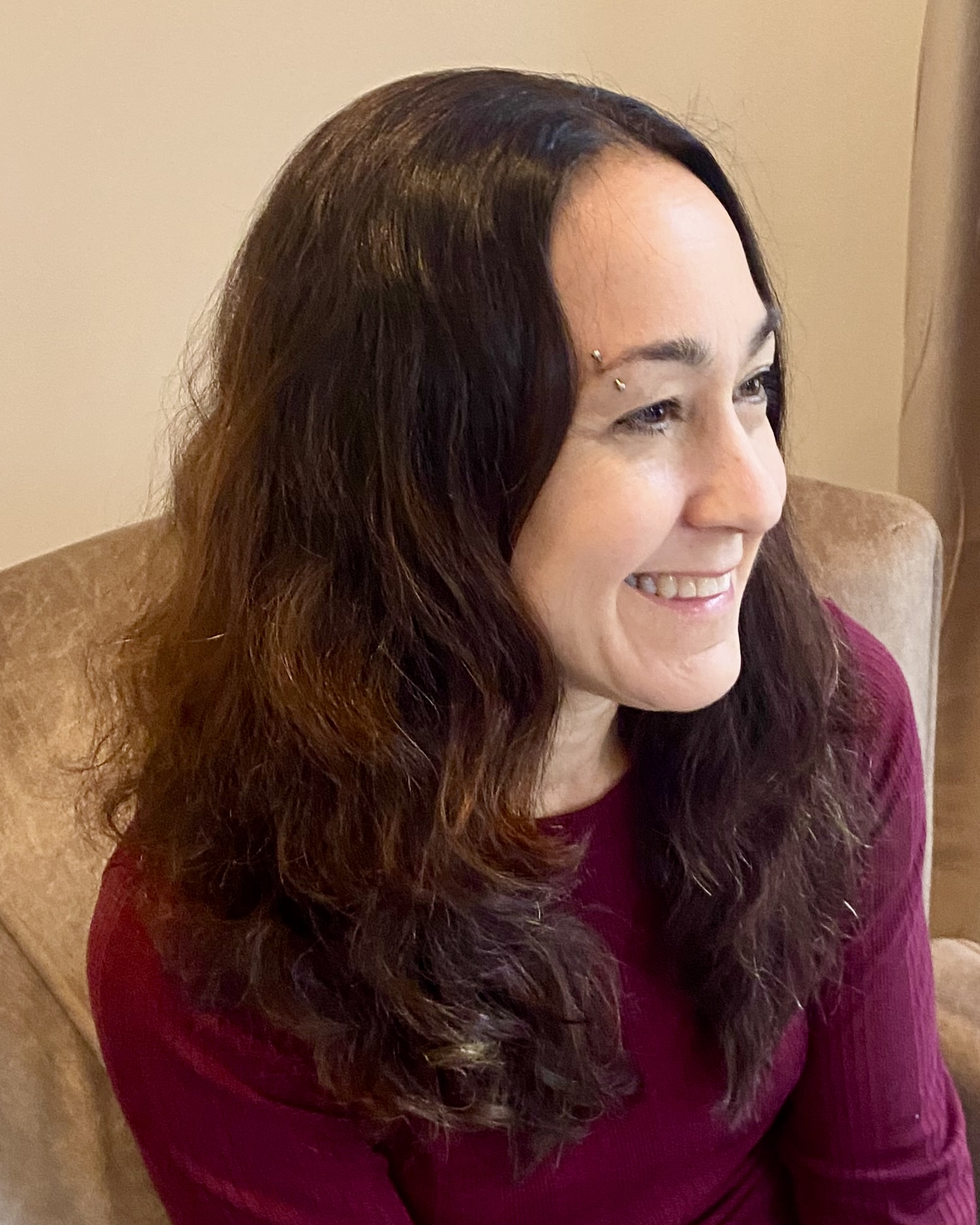 Alisha Goldblatt is an English teacher and writer living in Portland, Maine with her two wonderful children and one lovely husband. She has published poems and essays in many journals, including The Comstock Review, the Common Ground Review, Stonecoast Review, and Burningword Literary Journal. Alisha’s work leans towards identity and civic engagement, exploring her experience as a Jew, a woman, a mother, and an American.