By Ana C.H.Silva
It was the rice cooker in the corner of “Big Kitchen” that made me snatch up the little card advertising Siyan Wong’s “Mother Warriors” show at Equity Gallery. The little white appliance, its round surfaces decorated with pastel flowers, seemed teleported directly from my childhood as a first generation American from a family of Taiwanese immigrants. I realized I’d never seen a rice cooker in a painting somehow. Why not?
The second element that caught my eye was the central figure, standing in her bathrobe in the doorway of the crowded apartment, with no face. Sometimes, this kind of erasure feels violent or disturbing, but the deliberate smoothing out of her features felt compassionate, a softening blur. I was reminded of the writer Julie Otsuka’s choice, in When the Emperor Was Divine, not to name her central Japanese American protagonists. Most who read the book assume that Otsuka is making the point that non-Japanese Americans at the time of internment camps saw the Japanese Americans as indistinguishable, or that her unnamed characters would more easily stand in for the larger group’s experiences, and although those interpretations contain important insight, Otsuka reveals in an interview that she actually made the choice for the dignity of the characters themselves. She explains, “I think that the one thing you can’t take away from someone is their name, so I wanted to leave them just some tiny shred of self so only they and they alone know who they are.”
Siyan Wong’s various other shows, for instance, “Five Cents a Can: Making Visible the Invisible,” “When Woman Rise,” and “Home and Homeless,” exude the same kind of respectful compassion as she highlights the invisible labor of Chinese Americans, mostly women, who toil as canners, nail technicians, garment workers and more to survive amidst the self-absorbed and distracted affluence of their city. Her beautiful, observant portraits ask that we see their important, environmentally beneficial, and underfunded labor for what it is, and to get curious about who is behind the obscuring masks, hats, gloves, and invisibility of these people and workers.
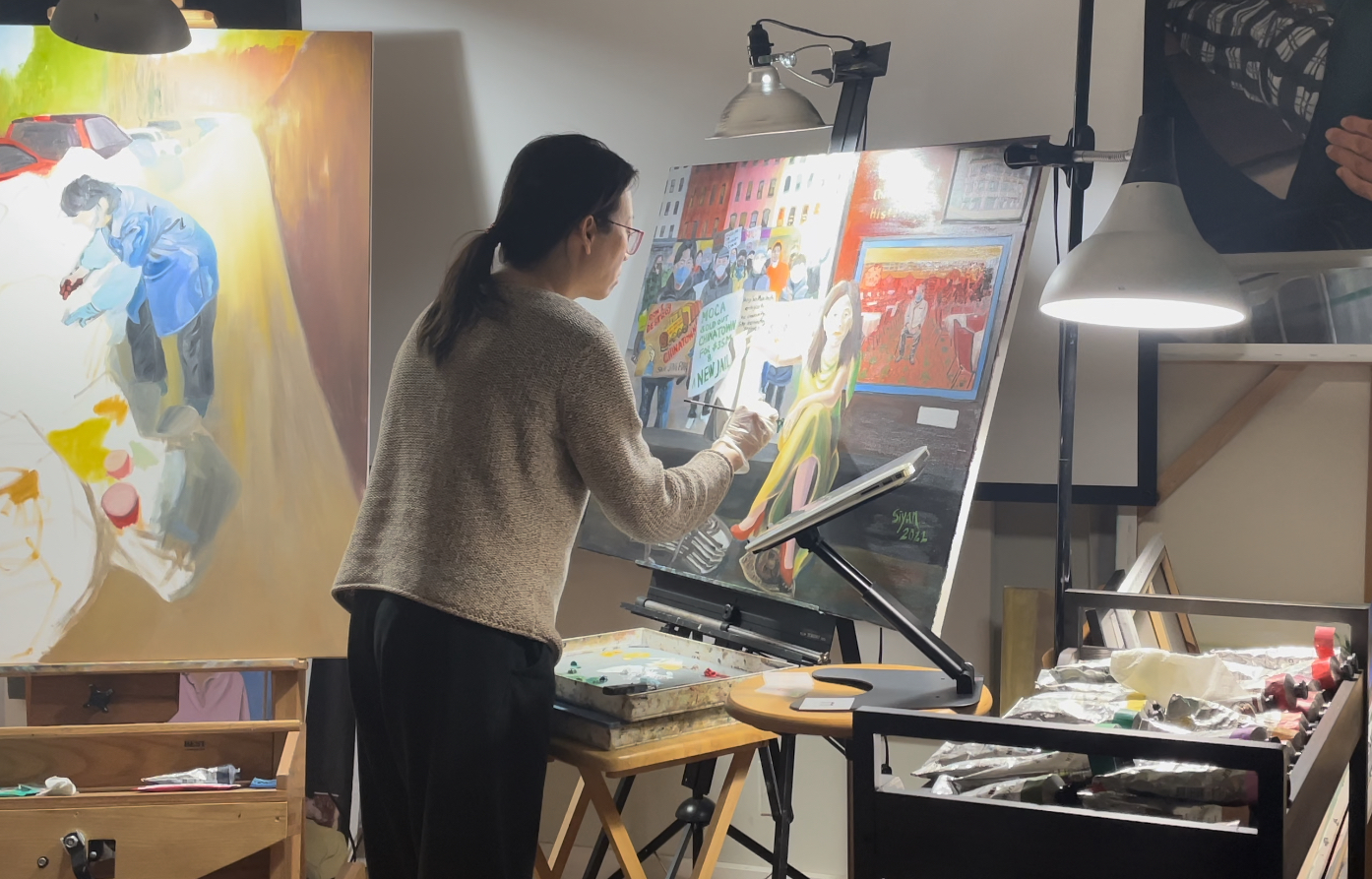
When I met up with Siyan Wong, I learned more about the layers of her life and experiences that shaped what kind of painter she is in this moment. Wong, a worker’s rights lawyer and federal prosecutor for 25 years, took early retirement to paint and to teach labor law and legal research,, and is part of a collective that supports canners in New York City and the related bigger better bottle bill. Her painting and activism will be centered in an upcoming feature length film edited and directed by Alvin Tsang, Painting Ecological Engineers. A selection of her past works is visible here, and do look out for her upcoming film and new shows.
Siyan Wong Art
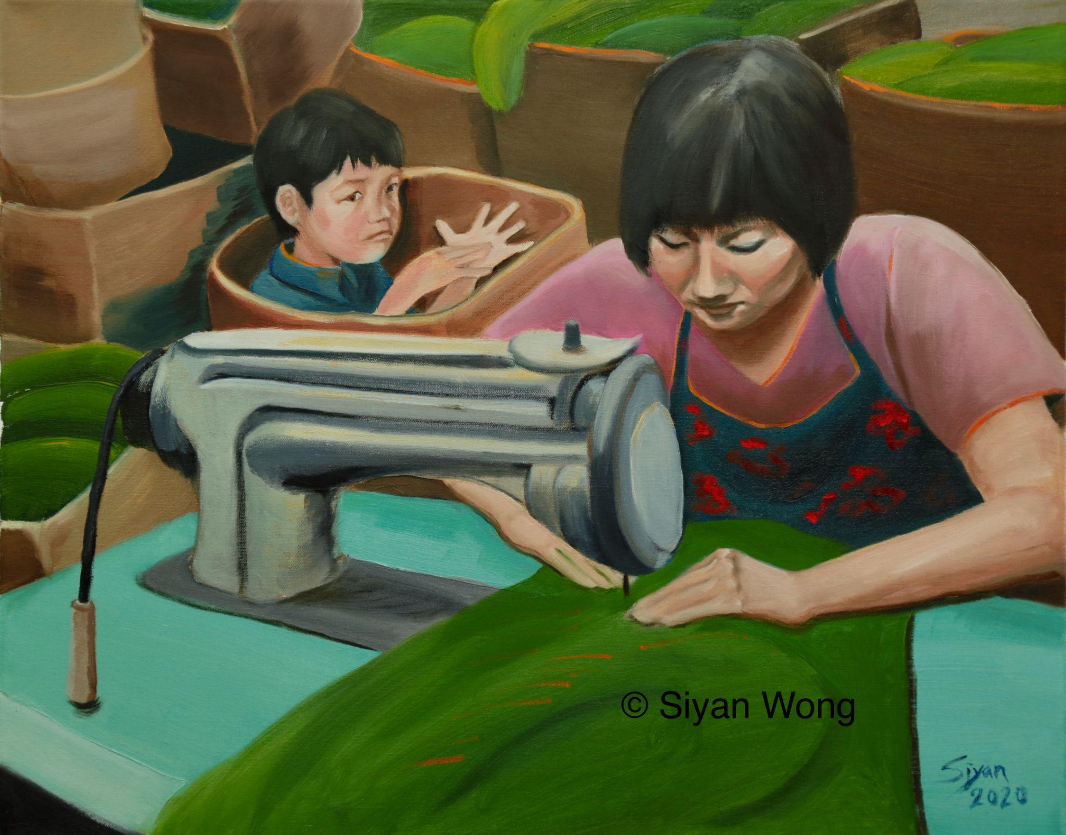
Siyan Wong, Sweatshop Childhood, 2020, Oil on Linen, 16 x 20 inches
This painting shows a glimpse of what some of the canners used to do, which is garment factory work. This is a common scene for thousands of Chinese immigrants who came in the late 1970s through 2000s when factories slowly left NYC. Low wages meant long hours for immigrant women. Their children often grew up playing in garment factories.
Exhibited in Souls of NYC Chinatown: Passion, Hope, Resilience (Group, Curator & Artist) at New York Arts Center, Chinatown, NYC
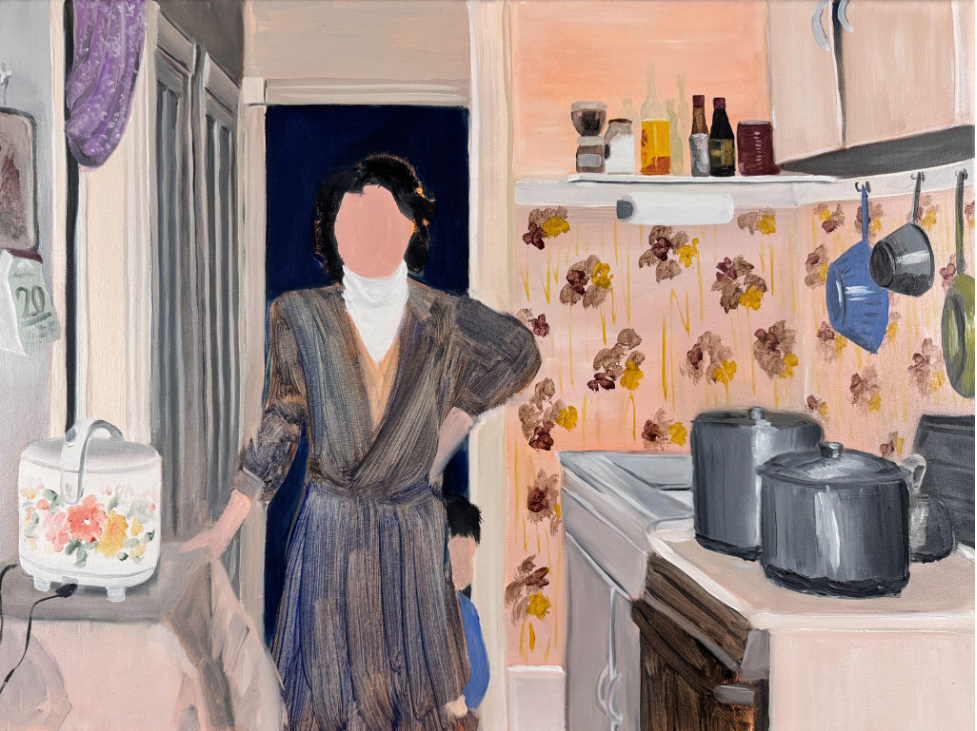 Siyan Wong, Big Kitchen, 2026, oil on linen, 18 x 24 inches
Exhibited in Mother Warriors from March 12 through April 22, 2026, at Equity Gallery, Lower East Side, NYC
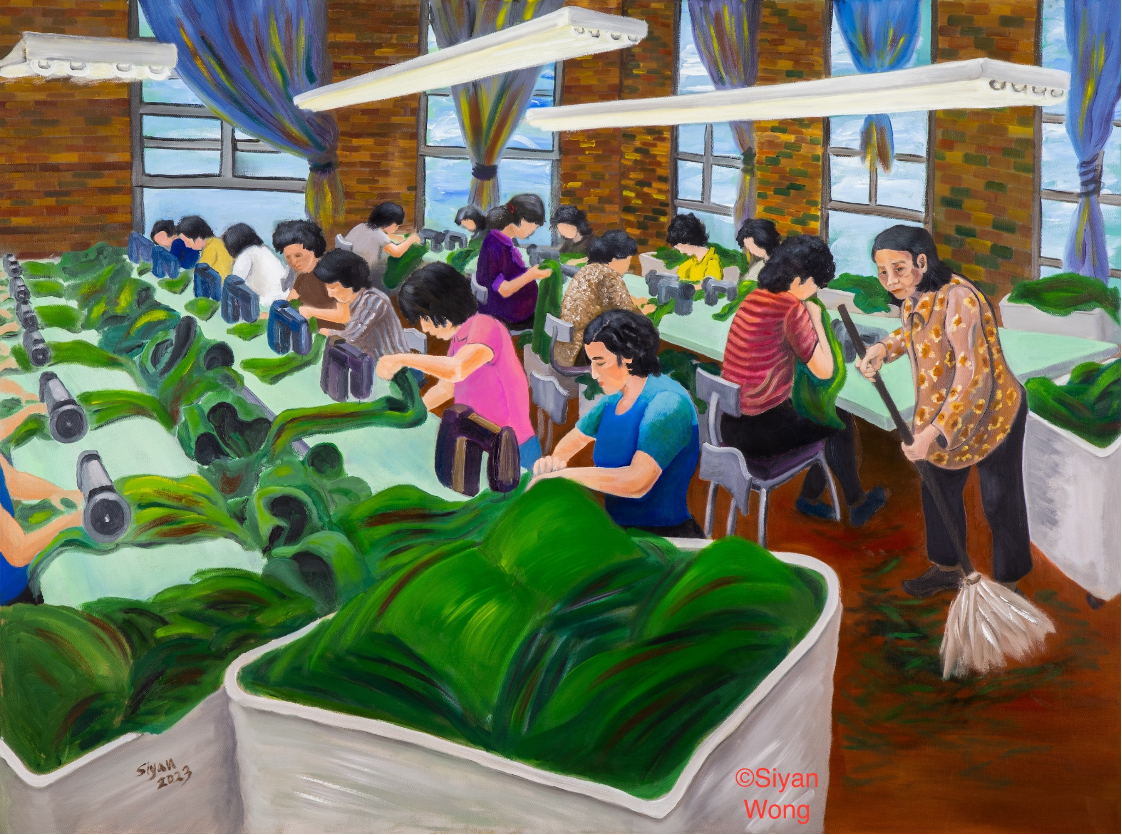 Siyan Wong, Sweatshop Cleaner, 2023, Oil on Canvas, 36 x 48 inches
Elderly immigrants who came in their 60s also found work in garment factories. Choi Yee, who is holding the broom and sweeping, also cooked white rice for the workers so the hot rice could warm the food they brought from home.
Exhibited in Lives of Three Canners: New York’s Chinese Elderly Immigrants (Solo) at 456 Gallery/Chinese American Arts Council, Soho, NYC
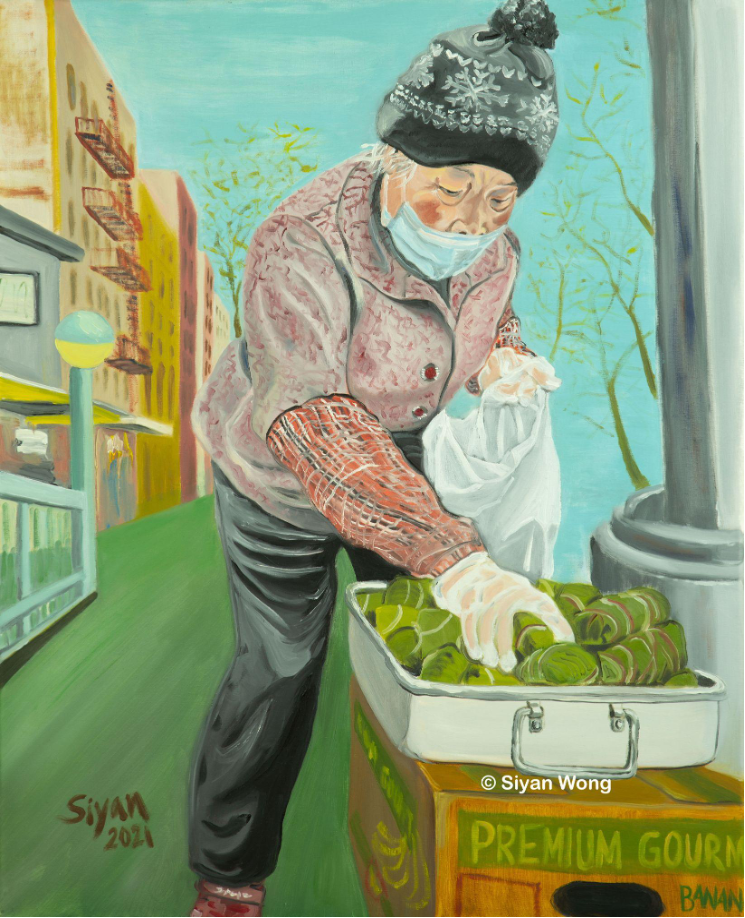
Siyan Wong, Jong Lady on Grand, 2021, Oil on Linen, 24 x 30 inches
Known as the Jong Lady on Grand Street, she used to work in a garment factory and her husband used to make jong (sticky rice with various meat or veggies wrapped in banana leaves) at a wholesale business. When garment factories left NYC and her husband lost his job due to ill health, she gathered her strength and came out to sit by the subway entrance on Grand Street everyday selling the jong her husband makes at home. This is the resilience of the human spirit.
Exhibited in Souls of NYC Chinatown: Passion, Hope, Resilience (Group, Curator & Artist) at New York Arts Center, Chinatown, NYC
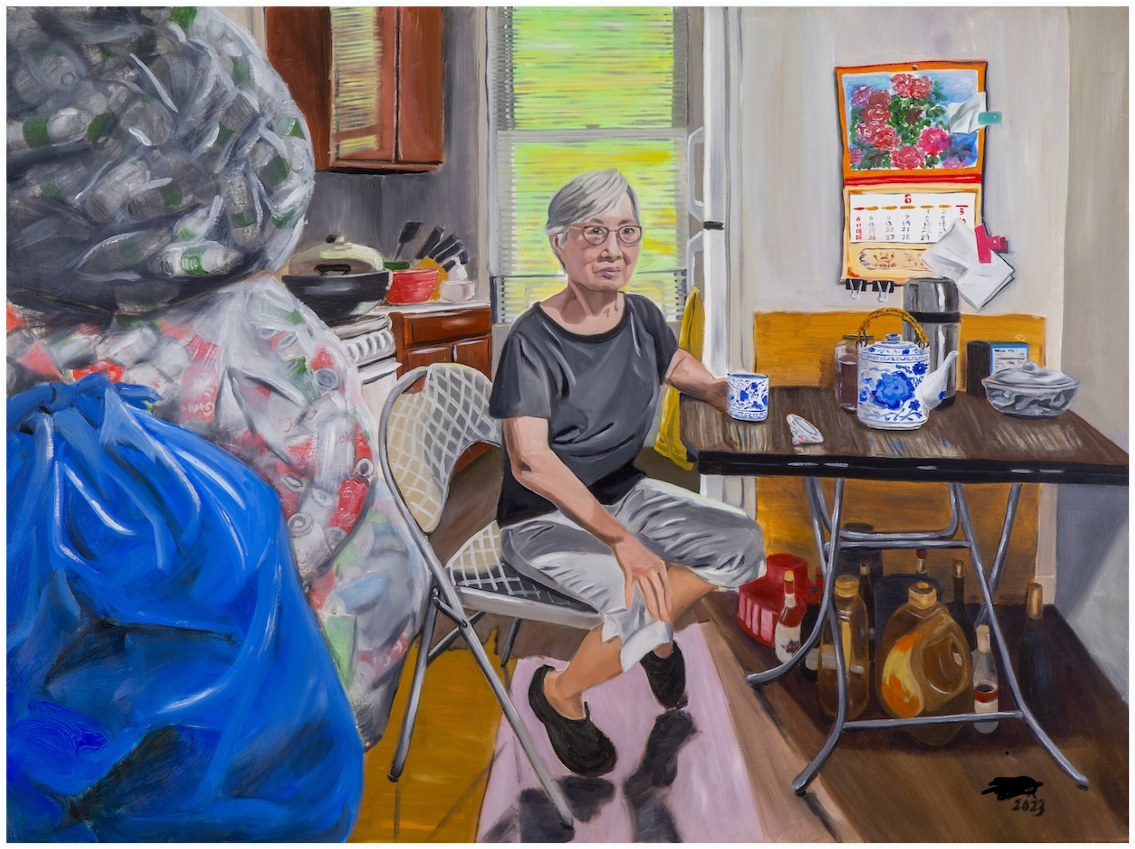
Siyan Wong, Ah Xim at Home, 2023, Oil on Canvas, 36 x 48 inches
This painting exemplifies the home life of Chinese immigrants that I will be painting more of in this new exhibition to give a fuller picture of the living conditions of Chinese immigrants in the 1980s and 1990s. The new paintings will include other family members.
Exhibited in Lives of Three Canners: New York’s Chinese Elderly Immigrants (Solo) at 456 Gallery/Chinese American Arts Council, Soho, NYC
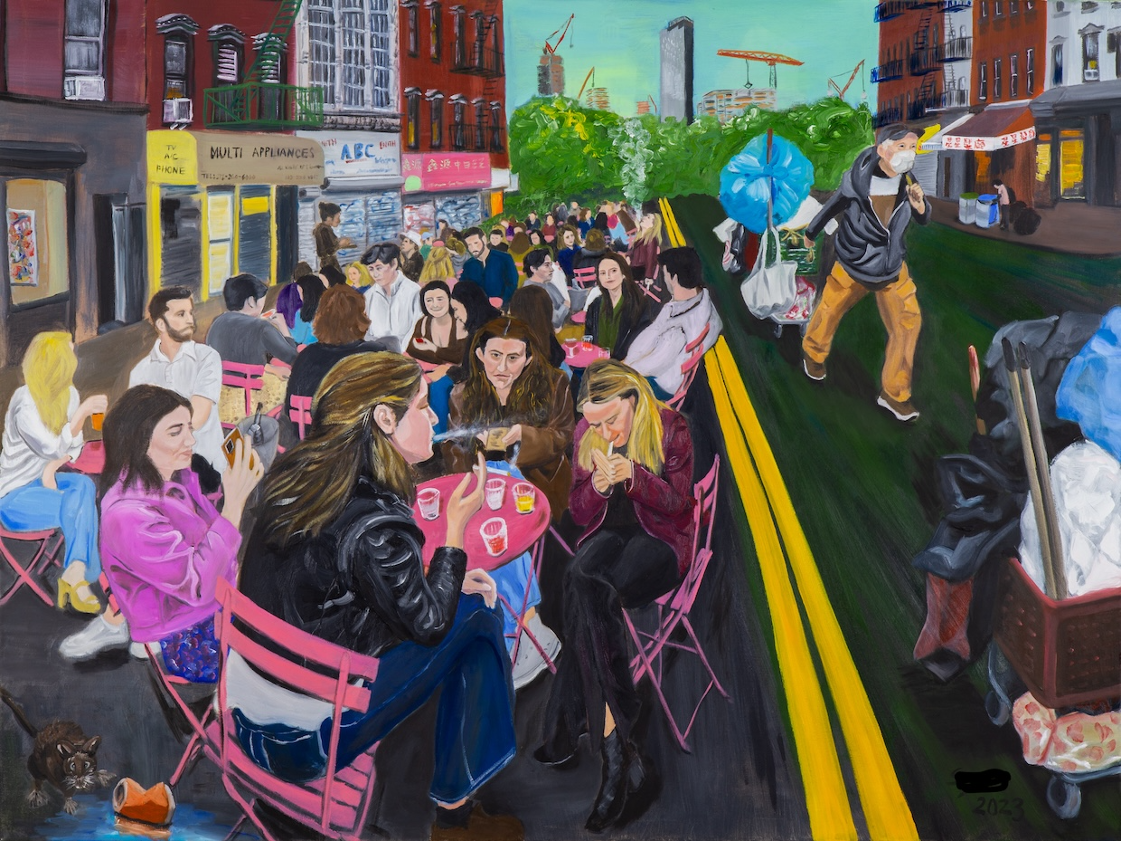
Siyan Wong, Three Cities, 2023, Oil on Canvas, 36 x 48 inches
This painting tells the story of the three cities that we live in today – the poor, the young, and the unstoppable luxury developments that are unaffordable for both the poor and the young. This painting visually exposes the injustices in the current norm.
Exhibited in Lives of Three Canners: New York’s Chinese Elderly Immigrants (Solo) at 456 Gallery/Chinese American Arts Council, Soho, NYC
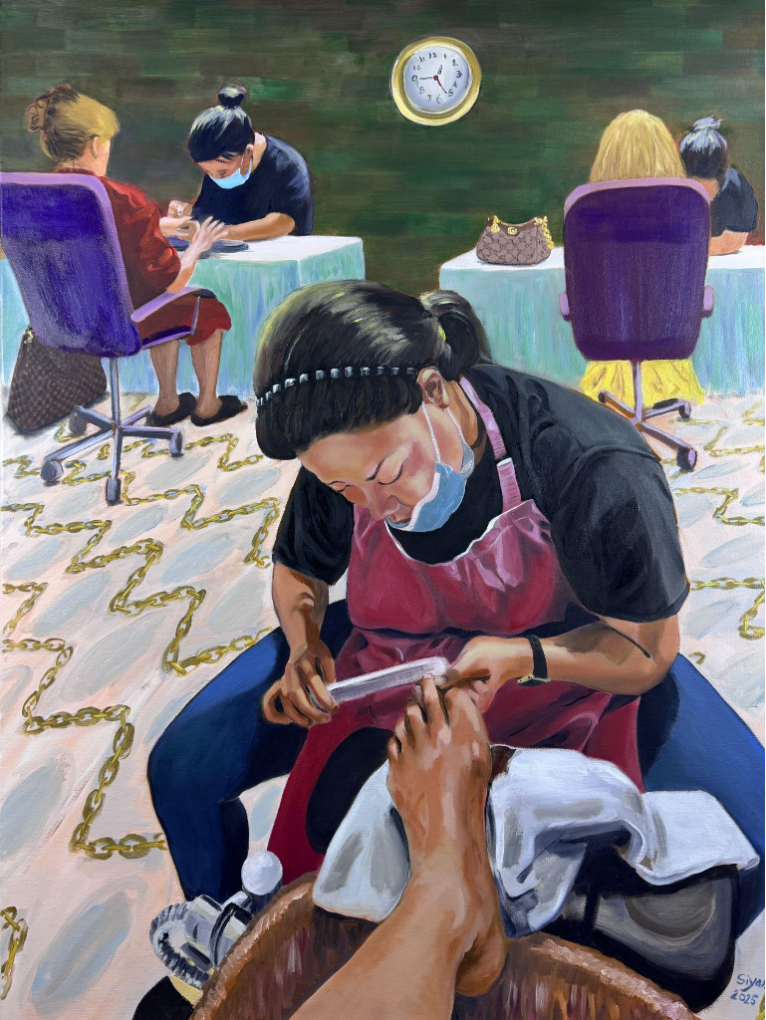
Siyan Wong,Nail Salon, 2025, oil on linen, 40 x 30 inches
Exhibited in Mother Warriors from March 12 through April 22, 2026, at Equity Gallery, Lower East Side, NYC
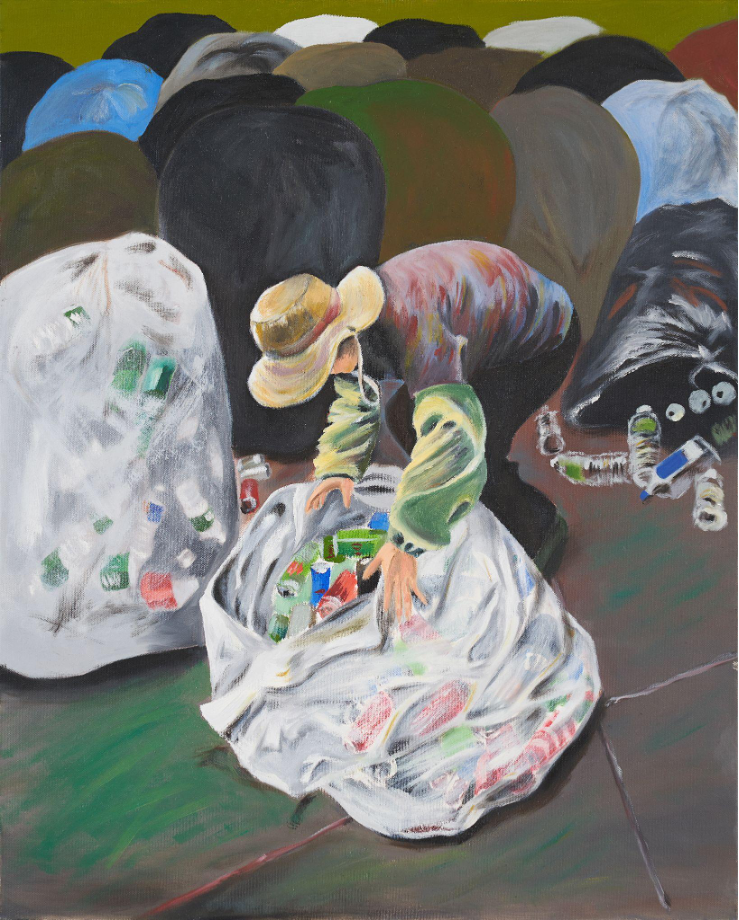
Siyan Wong, Sorting Cans, 2017, Oil on Canvas, 24 x 30 inches
This painting depicts the back-bending work of canners, a reminder of Jean-Francois Millet’s The Gleaners. Their work is so important for keeping cans and plastics off our streets yet their work is so undervalued, at just 5 cents per can. Thus, they toil long hours walking all day to make less than $50 per day – this is assuming they could get their cans redeemed. This is a familiar sight for those who “see” them.
Exhibited in Five Cents A Can: Making Visible the Invisible from November 10 through December 1, 2019, at the New York Arts Center, Chinatown, NYC
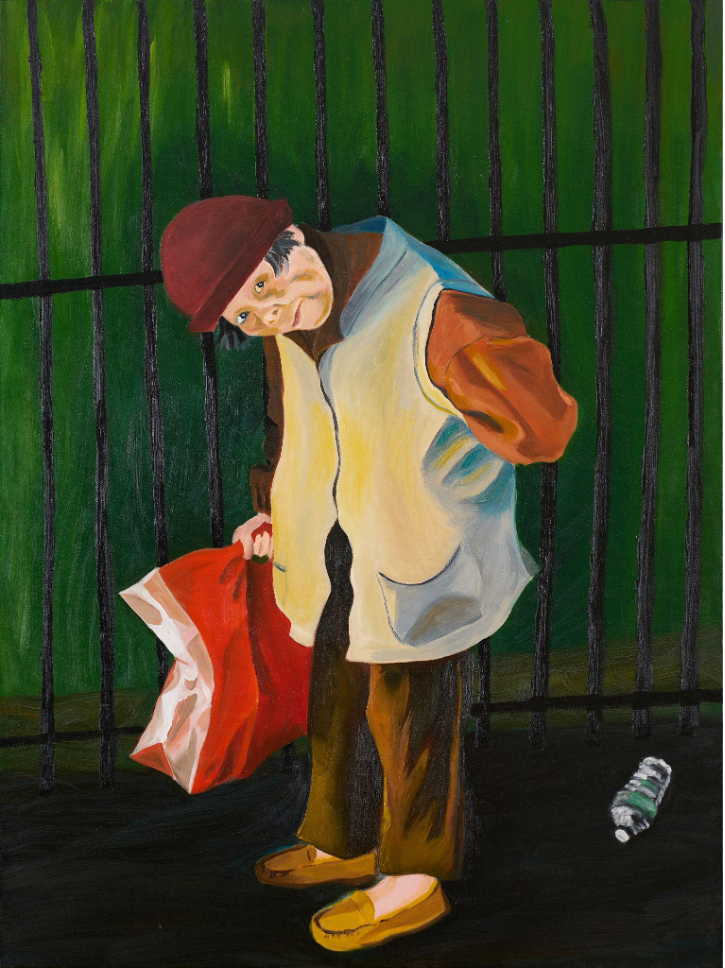
Siyan Wong, Hunched Canner, 2017, Oil on Canvas, 30 x 40 inches
This painting depicts an elderly canner I see in my neighborhood of the LES from time to time. She hunches and carries only a large plastic bag to pick up cans. Her life is kept from the gated co-op communities on Grand Street. Green represents wealth and money, and she is an outsider.
Exhibited in Five Cents A Can: Making Visible the Invisible from November 10 through December 1, 2019, at the New York Arts Center, Chinatown, NYC
Siyan Wong is a first generation Chinese immigrant and a U.S. labor lawyer. Siyan acquired her visual art fundamentals at LaGuardia High School but having set her eyes on financial stability, she transferred to and graduated from Stuyvesant High School. She commenced a vigorous litigation career as a workers rights lawyer after law school. Art, however, remained her passion and mode of expression. Primarily a self-taught and outsider artist, her work is inspired in part by the colors of Paul Cezanne, the confidence in Alice Neel’s lines, the powerful stories told by Jacob Lawrence’s simple figures and forms, and the passion of Isidre Nonell to paint the socially ostracized and “invisible.” Siyan’s paintings, replete with shallow pictorial space and panning compositions, offers a closely observed, unfiltered, cinematic view of the unrelenting struggles, yet earnest fortitude, of her subjects.
Siyan has exhibited her paintings at the Equity Gallery of New York Artist Equity Association, New York Arts Center, The National Arts Club, on Governors Island, 456 Gallery/Chinese American Arts Council, Woodstock Artist Association Museum, Cherry Arts Gallery, and Taller Boricua Gallery. She spoke about the subject matter of her art at The Black Institute, Asia Society New York, Museum of Chinese in America, and various universities and institutions.
Siyan Wong’s projects are fiscally sponsored by New York Foundation for the Arts and are made possible by the New York State Council on the Arts with the support of Kathy Hochul and the New York State Legislature; and in part with funds from Creative Engagement, a regrant program supported by the New York City Department of Cultural Affairs in partnership with the City Council, and administered by Lower Manhattan Cultural Council. Her work is also supported by the Asian Women Giving Circle.
Artist Statement
I immigrated to the United States when I was 11. I grew up in an immigrant family. Naturally, my art is inspired by the immigrant dreams of a better life and the reality of survival in an economy that dehumanizes them. My art makes visible the lives and experiences of the immigrant working poor in America.
My most recent exhibition, Mother Warriors, expands on my body of work to make visible elderly who collect cans and bottles in New York City. When I started painting canners in 2019, the cost of living was significantly less. Five cents a can, which was passed into law in 1983, was woefully inadequate then. Today, in a post-pandemic economy with grocery prices up at least 30%, canners are silently going hungry even while toiling more hours in extreme weather in one of the most affluent cities in the world. Inspiring change for the most vulnerable is my dream, and I trust that all I need to do is to share what I see.