
Kathy Anne Cowie
My Body Politic
When I married at 34, I thought the doctor was joking, describing me as a woman of “advanced maternal age.” My husband and I eagerly expected at any moment to be expecting. We tried. And tried. Clearly it was not going to go as planned. The process slowly went from cautious anticipation to fear and disappointment. From a question of when, to a question of if.
Three long years passed. Inevitably, our thoughts turned to science or adoption. We might be able to afford the science, but were we too old to adopt? To make matters worse, we now lived on a lovely suburban street where everyone had kids. I couldn’t leave my house without running into any number of beautiful children, or a well-meaning neighbor asking when we planned to have our own. What were we thinking, moving here so prematurely? We were thinking, we need a place to live. The kids will come along before we know it. We were not thinking of three long years in a neighborhood full to overflowing with kids.
Finally, the doctor suggested a procedure to remove some of the cobwebs from my reproductive areas. Or at least that’s how I envisioned it. We scheduled the procedure. A shockingly short time later, I found myself pregnant. We tried to wait a safe three months before sharing the news with family, but in the eleventh week, we caved. For my mother, our announcement came with a gift: yellow and mint green yarn to knit a gender-neutral blanket or booties—instructions included—because not long before, she expressed an interest in learning to knit. She never knit anything in her life, to my knowledge, but she had asked for this, and we called her bluff. If, after all this trying, I could finally have a baby, surely my mother, who sewed my childhood clothes, could learn to knit.
Unfortunately, that early announcement did not bode well. During a routine sonogram soon after, the technician, failing to find the baby’s heartbeat, dashed out of the room. He called back to us in a panicked voice, “I’ll get the doctor!”. The doctor assured us that technicians could not disclose information, but I am pretty sure dropping the equipment and running out of the room counts. This was a low point even for me, a world-class optimist. Days later, I was wheeled into an operating room for a D&C.
Thankfully, the knowledge that two beautiful daughters were born not long after has a way of making this story easier to tell. I could not write at all back then and I was powerless to control my emotions. Even now, I can’t walk into a church without remembering the Sunday we returned after my miscarriage. We were barely seated when tears started streaming down my face. My husband said nothing; simply took hold of my elbow and guided me down the aisle and back outside. I had no idea what pushed me over the edge in that moment, but I remember that day vividly, more than twenty years later. I did not want any part of a god who would not “let me” have a baby.
When my mother died, we had so much to go through, although much had been culled in a number of moves over her later years. Plenty had been handed down already, but there were still closets and drawers filled with surprises. I can’t remember where I found that bag with the yellow and mint green yarn, untouched, but it was a shock to see she held onto it all these years. She had tried to knit in the years since then; her friends—and even, ironically, my daughter—had patiently taught her. She certainly had the ability to learn, but even when she was alert and well, I could see her heart wasn’t in it. I teased her about these attempts in fits and starts. Now, I can’t help but wonder if that bag she kept with her all those years had something to do with her reluctance. Neither of my daughters got a set of booties or a blanket knitted by my mother, and that, all these years later, makes perfect sense to me.
* * *
I was reminded of this (though of course it’s something I live with every day) after the shocking fall of Roe v. Wade. My daughters unwittingly posted images on Instagram about mothers like me, who, despite desperately wanting a child, needed to have a D&C. They didn’t know about mine, and frankly, I had never planned to tell them. My failed attempt was so perfectly overshadowed by my later success, I never felt the need. And of course there was no reason to suspect my daughters would grow up in a world that took away rights so painfully earned and preserved for decades.
I’ve heard appalling stories since, so many more terrible than my own. I understand the great gift I had, living in a place where my doctor was able to offer me a choice: I could schedule a D&C—or wait, carrying this dead baby inside of me until my body finally rejected it. At the time, my doctor estimated that could take as long as two months. Two months. We barely considered that a choice. We scheduled the procedure, in a clean and bright hospital, with my earnest, Catholic parents waiting in the lobby to offer their support.
I think about the anonymous people who believe they should have a say in these intimate moments of a woman’s life. Who don’t care that so many of us are actually trying to have babies. And I don’t think I’m being vindictive or wrong when I say I truly wish they could experience what they are suggesting for themselves. That they could, while suffering the ineffable sadness of losing a baby so desperately wanted, be forced to carry it, dead inside their body, for two endlessly long and painful months.
Back to “Motherhood and the Body”
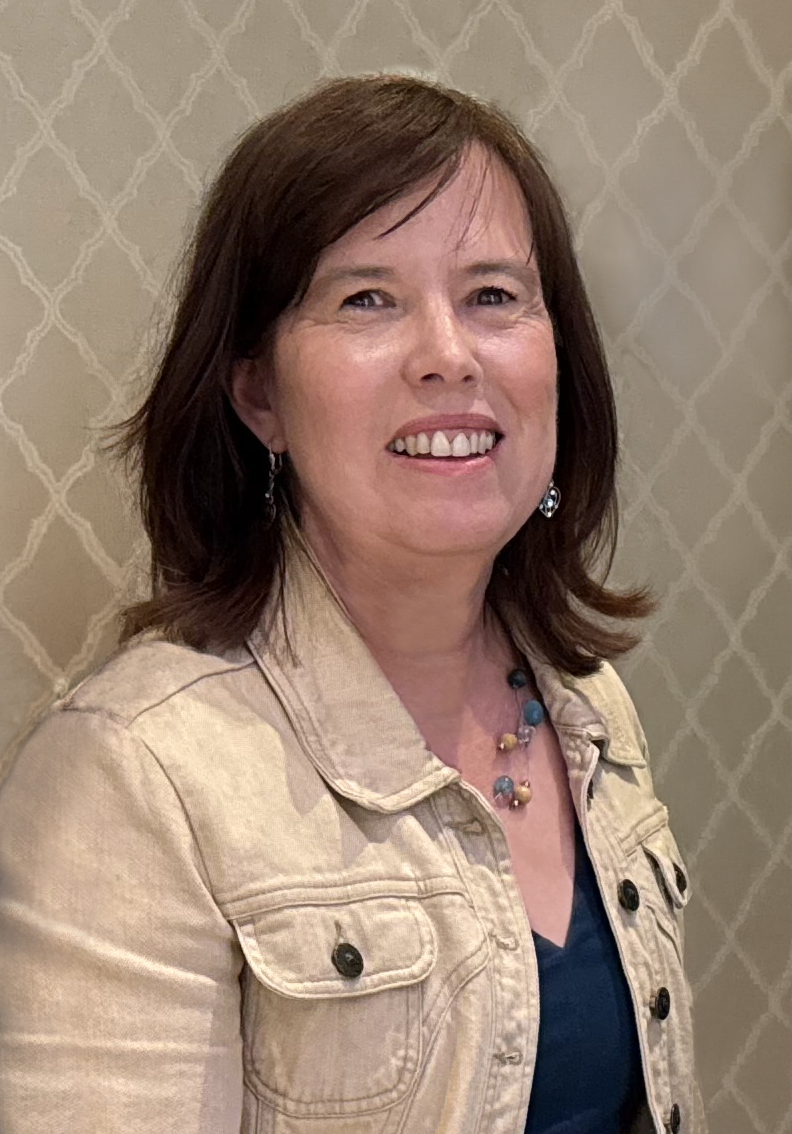 Kathy Anne Cowie is a writer and graphic designer. Her essays have been published in NJ Monthly magazine and the Nerdy Book Club. She is a member of the SCBWI and is currently illustrating a non-fiction picture book and writing a middle grade novel. This essay is part of a larger collection that includes other published work centered on family and the place we call home. Find her at KathyAnneCowie.com.