
 Review by Rebecca Jane
The Seeds empowers fresh perception, until perception become synonymous with ecological compassion. These poems stir thought, wisdom, and sensitivity to notice “the immeasurable / heartbreaks of the field” (3) so that we may embrace our “obligation to listen and mourn our lost fields and meadows” (69). Here, a window that will not open turns into a life lesson. The blooms, shadows, fruits, and breezes that the tree branches bear offer messages, if we cultivate sensitivity to them. Cecily Parks is the author of Field Folly Snow, known for its passionate interiority, and O’Nights, a collection that explores how the natural world shapes a sense of self. Her poems have appeared in The Nation, The New Yorker, The Best American Poetry, and more; she teaches in the MFA program at Texas State University.
Texas shows its dry creeks and extinct fish in these poems, as the Rio Grande shows children separated from parents, and as a mother cardinal sings her song, a grackle eats her eggs. On a walk, the poet notices a cut bougainvillea and can sense the whole story of the shears and the woman wielding those shears and why she would cut. Traditionally, poets have repeated beautiful names of plants and nature imagery indicating that these are synonymous with solace; but, here floral beauty becomes complicated. Sense. See. With deeper awareness, we notice that these plants may be non-native and what does that mean for the native species? “Underneath, I purse my lips because I love the idea of a plant-powered kiss. Which matters more, love or the fact that mistletoe is parasitic, gorging on the tree it grows on? I eye the greedy tree lover, easiest to see in winter. Mistletoe might be a mirror” (64). Human consciousness becomes awakened to hard truths that the plant kingdom teaches us. Nursery rhyme-like rhythms turn into revelations of cruelties, ironies, and the real ways beauty can ring with doom.
Harmonious words grow vine-like into rhythmic lines that strike an inward sense of accountability. Humanity must own up to its responsibilities. The grave and profound ways these poems convey mood and atmosphere pull at the roots of longing and mourning. We want to weep and insist: the hackberry tree is not trash; and there is hope in the red seeds of the Texas mountain laurel, the grackles plummeting, flowers spilling light. But then again, be careful with hope—is hope too fragile? Is hope feminine? Is hope the province of mothers? What is your rapport with hope? We long to ask Wordworth’s solitary reaper or Roald Dahl’s “Sound Machine.”
“Backyard Rhyme,” “Lightning Rhyme,” and “Mother Cardinal Rhyme” juxtapose the children’s nursery rhymes with mature wisdom, complicated by a sense of ambiguous delight. Again, the hackberry appears. Again, the window. And it feels like there is a secret unity to this whole collection—a lamentation for one particular backyard tree that will be chopped down. Contemplate that! A poet writes an entire collection, dedicating her life and her time and her craft to honor one tree that will be removed from her yard, a tree that provided shade, beauty, steadfastness, oxygen, green, life. This collection models deep feeling and dedication. Let’s not just reminisce about a girlhood sleeping in the woods; but, let us mother those who sleep under the hackberry. These poems reveal the urgency of nurturing renewed stewardship of the land, the plants, the creatures, and ourselves.
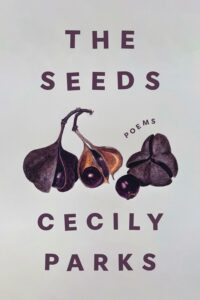
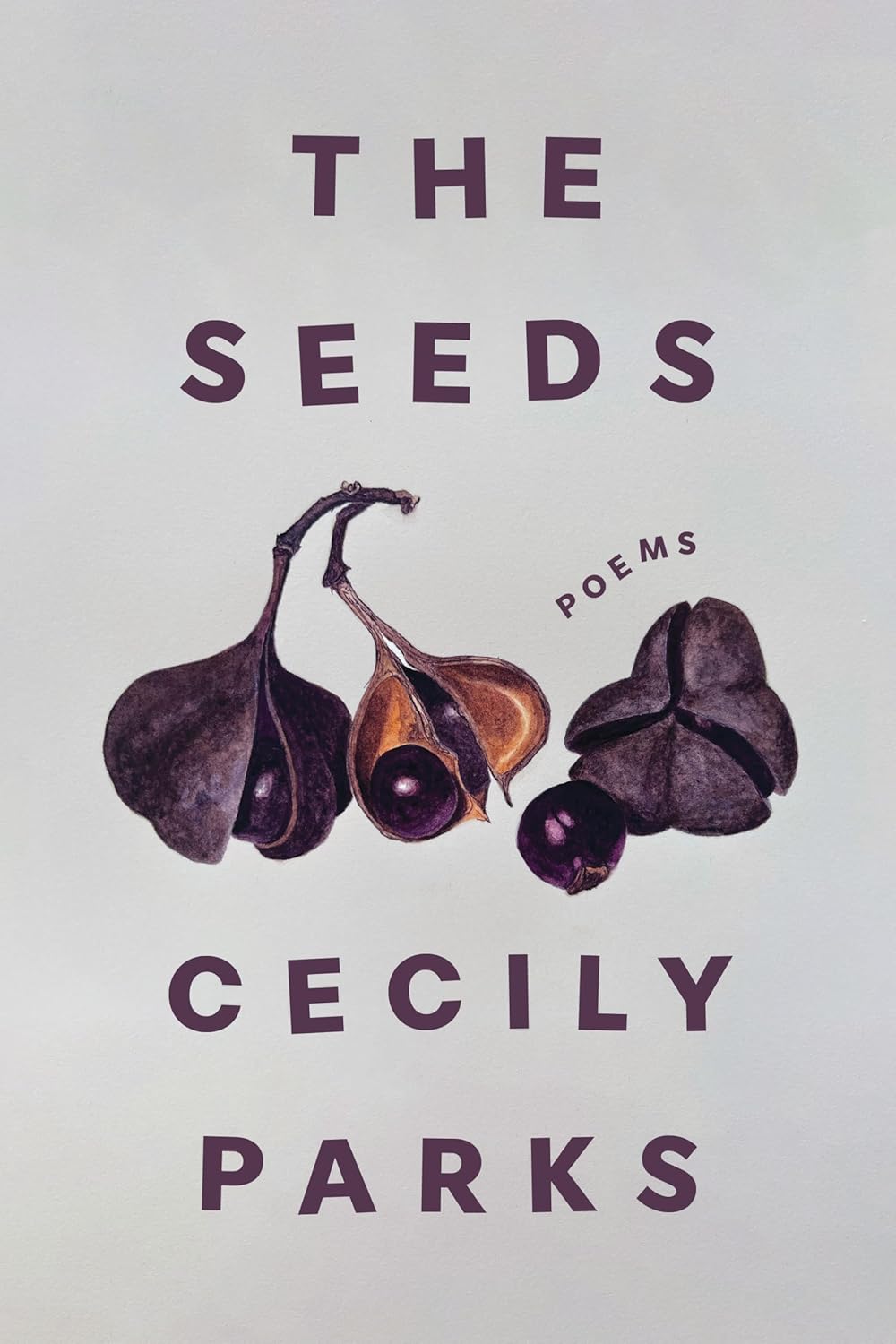
The Seeds by Cecily Parks
Alice James Books 124 pages, paper $21.95 USA
ISBN: 978-1-949944-89-1
Rebecca Jane is the author of She Bleeds Sestinas, which was a finalist for a Best Book Award in 2023. She works as a freelance writer, ghostwriter, and poet who travels to Asia to study yoga, Sanskrit, and Mandarin. She lives with her daughters on unceded Kumeyaay land. (San Diego, California).