
Melissa Fraterrigo
Mother-Daughter Osmosis
Last week, my daughter Eva and I walked to the neighborhood swimming pool a few blocks from our house. The sun glinted off the water’s surface as Eva and I tossed our towels on lounge chairs. She took off her t-shirt and shorts, her long limbs and muscular thighs as strong as any engine you might find beneath a hood. At fourteen, she’s nearly the same height as me but with a splattering of freckles across her nose. Some family members say Eva looks just like I once did.
Eva grabbed a pair of goggles from our swim bag and waved me off as I arranged myself on a chair. She hadn’t asked if I was coming in, and that bothered me, as if my place was permanently moored on the dry concrete.
Around the pool deck, some of the patrons held open novels. Others scrolled their phones, but of the women in attendance, few, if any, splashed in the water despite the 80-degree temperatures. Nearly all of the women wore ball caps or floppy hats with wide brims maybe to protect their hair color, like me, or maybe to block the sun’s wrinkle-inducing rays. Whatever the reason, many of us were practicing some beauty ideal.
My Mom’s beauty routine consisted of penciled eyebrows and Chapstick. Sometimes she dashed a muted brown lipstick across her lips on Sundays when we went to church. Sitting next to her in the church pew, I was all too aware of her dowdy dress and graying hair. It was permed in Mrs. Burdeau’s basement and fluffed around her neck like loosened cotton balls rather than the sleek styles worn by Mrs. Marsik or Mrs. Muntella, to say nothing of Mrs. Keaton from Family Ties or even Angela from Who’s the Boss?
Perhaps if Mom were more stylish, then my own standing would improve. Carrie Montella might invite me to sleep over at her house. During the school skating party, a boy might ask me to skate. Certainly, this was more the result of my own insecurities and projections—but I wanted Mom to be perceived a particular way because I believed that trickled down to me as well, a sort of mother-daughter osmosis.
I understood at an early age that being female meant being on display and I accepted this responsibility. In third grade, I began setting my hair in rollers before bed. All night, it felt as I was sleeping on the back of a porcupine. Yet I understood beauty would hurt. That Christmas, I asked for panty hose, and sashayed around Grandma’s house on Christmas day feeling dangerously powerful when the hem of my holiday dress brushed against them. Once in a while I’d lean over and look at an extended leg, marveling at the shape of my body. I practiced watching myself, prepared for the time when others would take over.
For a while, when my daughters were younger, I purchased clothes from the sale section at Anthropologie. In the grocery check-out, I flipped through the latest Vogue in hopes of keeping up with the latest styles. And when the gray hairs springing from the top of my head seemed to multiply overnight, I booked an appointment at the salon to color my mid-length brown hair. At first, I did so every thirteen weeks, then ten, now it’s down to nine and when I see the appointment on the calendar, I cringe at the idea of spending two hours in the salon. While the beautician paints color on my hair, helping me keep up the charade of youth a bit longer, my daughters grow older. Just this year, Eva began to spritz herself with perfume before school, and sometimes she asked to use my straightening iron on her naturally curly hair.
“But your curls are so pretty,” I said.
She shrugged. “It’s just hair.”
Of course, I said. And then I stood outside the bathroom door and watched her feed her long brown hair through the iron, steam gasping in fine clouds. After bending her arms behind her head like a pretzel, she asked me to straighten the back of her hair. I used a comb to section her hair into pieces. When I finished, I asked her if she wanted to see the back of her head, she said no thanks, and dashed into the kitchen where she hoisted her overly large backpack, said, “Bye, Mom!” and slammed the door.
More and more, I am left behind.
When I went back into the bathroom that morning, I picked up the hair iron. Cool to the touch, I wrapped its cord around the handle and put it away. I ran my fingers through my unwashed hair and when I saw the reflection of my 50-year-old face in the mirror, I straightened my shoulders, patted the fine lines crinkling the skin around my eyes. I did not turn away.
Usually at the pool, while Eva and her sister do handstands or zoom around underwater, I tread water and watch kids belly flop off the diving board. But instead, during my outing that day with Eva, I fished into the swim bag, grabbed an extra pair of goggles, and slipped beneath the clear blue water. Underwater, my hair fluttered around my face as the water delivered a cool reprieve from the day’s heat.
When Eva and her sister were younger, they loved to play tea party on the floor of the pool. Before submerging, the girls would decide above water who would bring what to the party, and then they would take big gulps of air and meet underwater, where they would share their imaginary treats.
When Eva and I surfaced in one particular moment at the same time, I smiled at her, goggles to googles. “Do you want to have a tea party?”
Eva tipped her head at me and grinned.
I told her I would bring the brownies.
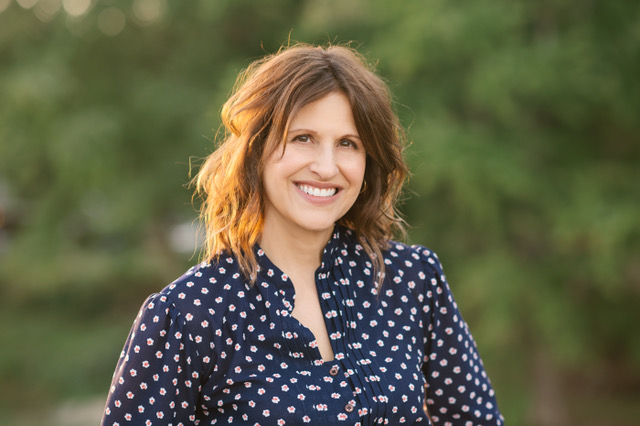 Melissa Fraterrigo’s memoir, The Perils of Girlhood was published by the University of Nebraska Press in Fall 2025. She is also the author of the novel Glory Days (University of Nebraska Press), and the story collection The Longest Pregnancy (Livingston Press). She teaches creative writing at Purdue University, in the Butler University MFA in Creative Writing program, and is the founder of the Lafayette Writers’ Studio in Lafayette, Indiana. Please visit melissafraterrigo.com.